Retail AI has moved past the easy question.
The question is no longer whether retailers will experiment with AI. They already are. The better question is which store-level problems are specific enough, valuable enough, and measurable enough to justify deployment.
That is the practical lesson inside NVIDIA’s 2026 State of AI in Retail and CPG survey. According to NVIDIA’s January 7 summary, 91% of respondents said their companies are actively using or assessing AI, and 90% said they plan to increase AI budgets in 2026. The same survey says 89% report AI is helping increase annual revenue, while 95% say it is helping decrease annual costs.
Those numbers are useful, but they are not the whole story.
The important shift is that retail AI is leaving the pilot deck. Retail TouchPoints’ January 8 coverage reported that 58% of retail and CPG organizations are actively deploying AI solutions, up from 42% in 2024. NVIDIA also said retailers are putting more attention behind agentic AI and physical AI, with 47% using or assessing agentic AI and 17% using or evaluating physical AI.
That sounds like momentum. It is also where mistakes get expensive.
When budgets rise, demo projects multiply. Teams start looking for places to “apply AI.” Vendors show impressive prototypes. Executives ask how fast the company can move. Everyone wants the big use case.
Retailers should probably start with the boring one.
The boring use cases will win
The best retail AI projects are not always the ones that look best on a conference screen.
They are the ones that reduce repeated questions, prevent bad handoffs, help associates answer with confidence, improve inventory decisions, shorten wait times, and turn messy customer intent into something the business can act on.
That is why the store matters.
A store is not a clean software environment. It is noisy. Products move. Shelves get messy. Customers use the wrong words. Associates are walking, carrying, scanning, restocking, answering the radio, and helping three people at once. Inventory data may be close enough for reporting but not close enough for a customer who drove across town for one item.
This is where many AI pilots break. The demo assumes the question is clear, the data is clean, the user is patient, and the next action is obvious. The store does not give you those conditions.
Physical retail is full of edge cases because physical retail is the edge.
That does not make AI less useful in stores. It makes the implementation standard higher.
Physical AI should not mean theater
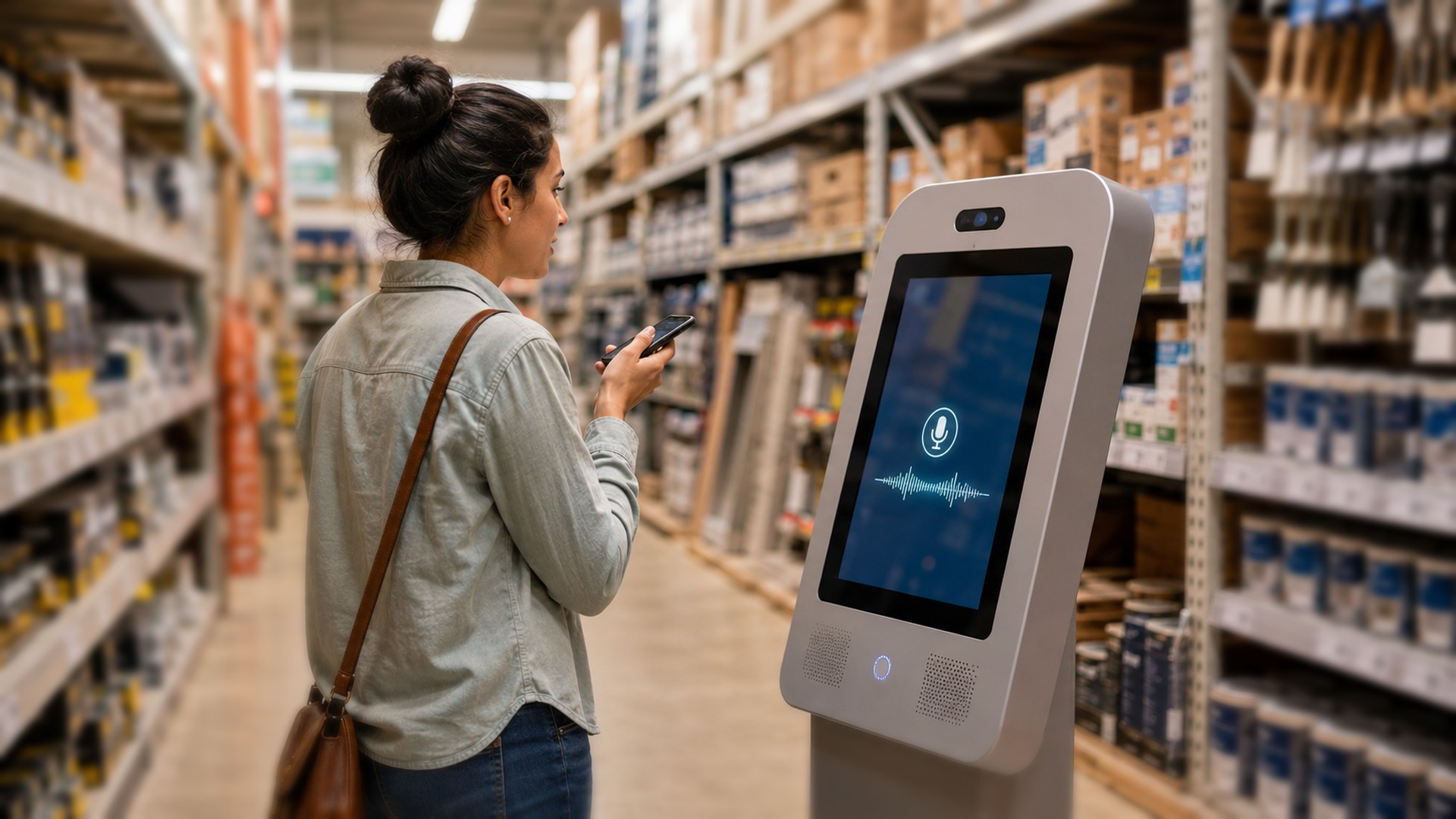
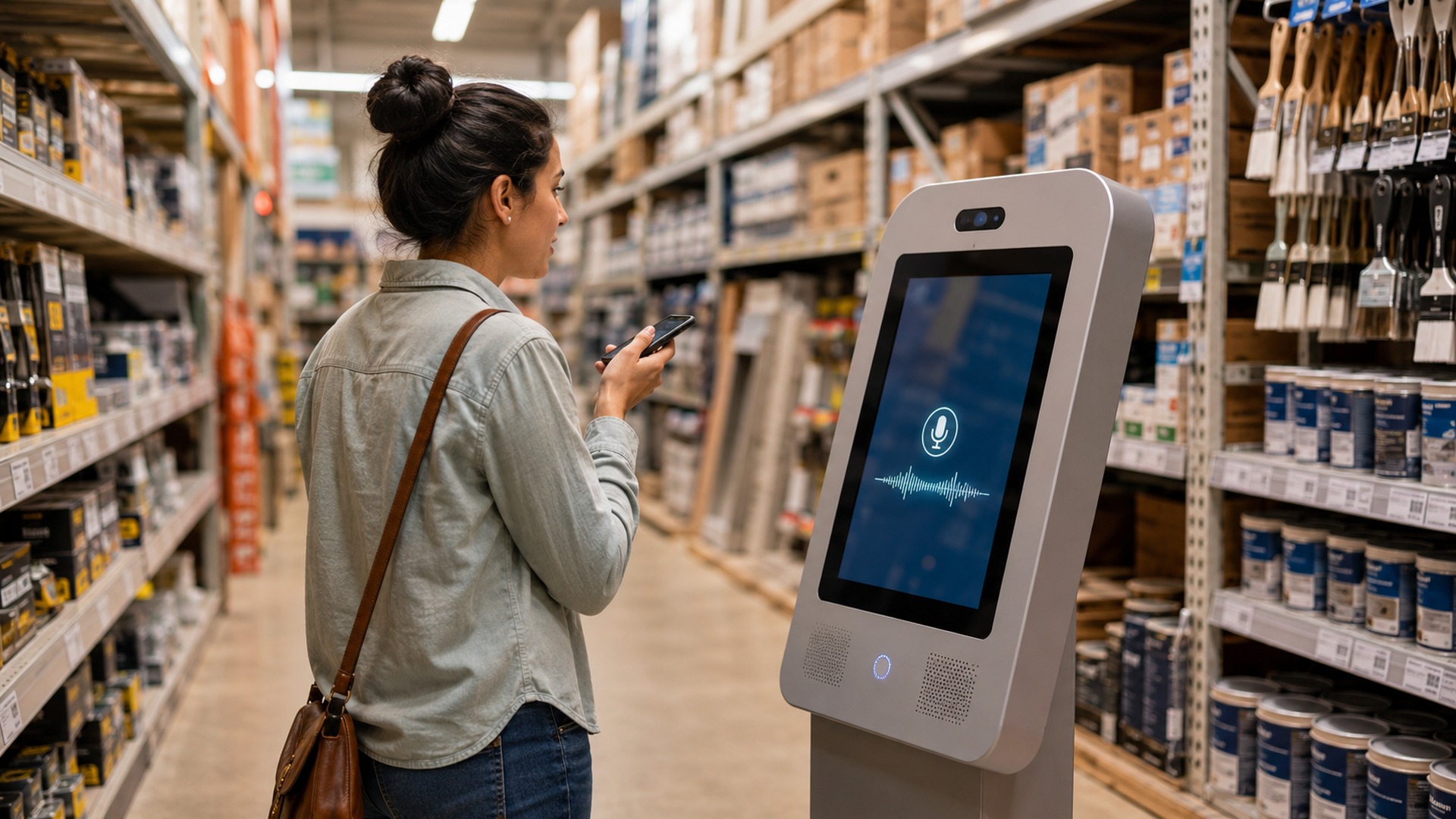
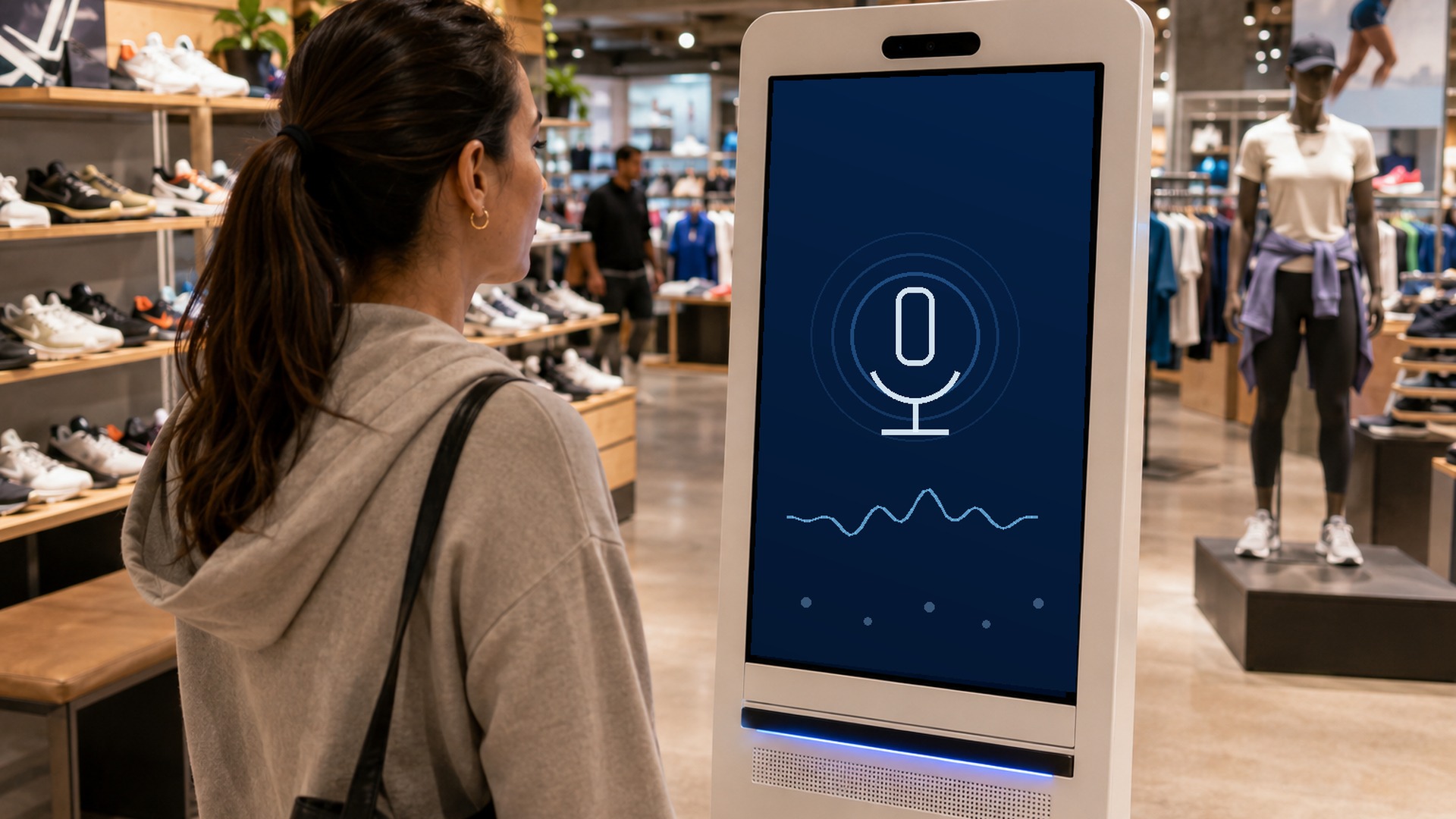
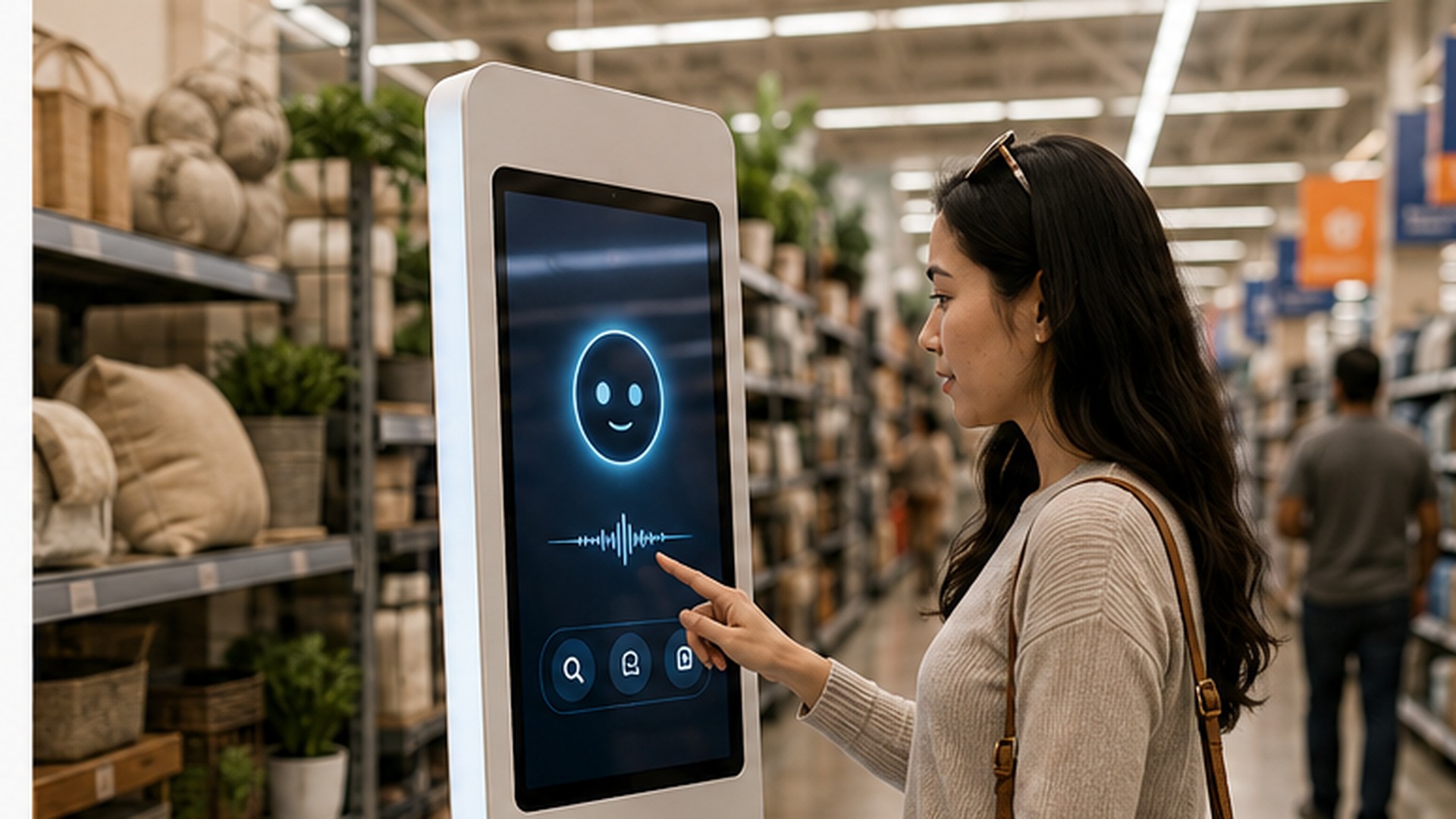
“Physical AI” is going to become one of those phrases retailers hear a lot. It will be used for robotics, computer vision, sensors, kiosks, in-store voice assistants, smart shelves, associate tools, and probably a few things that should just be called screens.
Retailers should be careful with the label.
Physical AI should not mean putting something futuristic in the store so people notice it. It should mean AI that can work in the physical conditions of retail: local inventory, human handoff, unclear questions, changing store layouts, busy staff, multilingual customers, and the gap between what the system thinks is true and what is actually happening on the floor.
A robot that scans shelves can be useful. So can an associate-facing AI assistant. So can an in-aisle voice interface that helps a customer compare products or understand what they need for a project. The common thread is not the hardware. The common thread is whether the AI improves a real store workflow.
That is the part worth measuring.
Did the customer get a better answer? Did the associate avoid a low-value interruption? Did the system know when to bring in a person? Did it make the store easier to operate? Did it create an operational signal the retailer did not have before?
If the answer is no, it is probably not a retail AI deployment. It is a technology display.
What retailers should do next
The practical move is to stop asking, “Where can we use AI?” and start asking, “Where does the store lose customer intent?”
That question points to better use cases.
Customers ask the same product questions again and again. They cannot find the right item. They compare two products without understanding the tradeoff. They need help in another language. They wait for an associate for a question that should take 20 seconds. They abandon a project because they do not know the next step. They leave without buying the missing accessory, part, or service that would have made the purchase work.
Those are not abstract AI opportunities. They are physical retail problems.
A good AI deployment should connect three layers: knowledge, action, and handoff. Knowledge means product data, project logic, policies, store information, and inventory. Action means the ability to locate, compare, recommend, reserve, add to cart, notify staff, or create a task. Handoff means the system knows when a human should take over and gives that person the context to continue without making the customer start again.
That is a higher bar than a chatbot. It is also a more useful one.
NVIDIA’s survey makes one thing clear: retail AI investment is not slowing down. But the winners will not be the retailers with the most pilots. They will be the retailers that pick operational problems with enough specificity to survive the store floor.
At Biscuit, this is the version of retail AI we care about. Not AI as a novelty. Not AI as a cheaper way to avoid service. AI as a way to give real customers and real staff better access to knowledge, guidance, and action in the moment.
The next phase of retail AI will not be judged by the demo.
It will be judged under fluorescent lights, in the aisle, when a customer needs help and the store has one chance to get it right.