Most people will read Home Depot’s AI voice agent rollout as a better phone system.
That is true. It is also too small.
The bigger point is that customers are ready to ask retailers for help in natural language, and they expect that help to connect to real action: product availability, project advice, order status, service requests, carts, and a human when the situation needs one.
In April, Home Depot said it was replacing traditional store phone menus with AI-powered voice agents built on Google Cloud’s Gemini Enterprise for Customer Experience. Instead of waiting through a menu, customers can call a store and say what they need in their own words. The system is designed to understand intent, answer common questions, support real-time translation, and keep a direct path to an associate. Home Depot’s own summary frames the shift as moving away from “please listen to these options” and toward “how can I help?”
The early numbers are useful. In a 50-store pilot, Home Depot said the AI voice agents could understand why a customer was calling in under 10 seconds and help customers reach a solution four times faster than traditional phone menus. The company also said associates in pilot stores reported higher job satisfaction because they had more time to focus on shoppers inside the store. Its April announcement says the system can also check order status, confirm product availability, provide store information, initiate service requests, send product links to pre-filled carts, help complete purchases by phone, and build project carts from a customer’s description using real-time online or in-store inventory.
That is where this gets interesting.
A store phone call is usually not abstract. The customer is not calling because they want to “engage with the brand.” They are calling because they need a product, a part, a price, an aisle, a delivery update, a project answer, or a person who can help them finish something today.
In home improvement, that intent is often messy. A customer may not know the right product name. They may describe the job instead of the item. They may ask what they need to patch a wall, replace a toilet part, hang shelves, or choose the right grout. The retailer has to translate the problem into products, steps, inventory, and confidence.
That is exactly where voice becomes useful.
Typing works when the customer knows the keyword. Voice works when the customer has a problem.
The phone proves the behavior
Home Depot’s January announcement with Google Cloud pointed in the same direction. The company described agentic AI tools that bring project recommendations, local store inventory, and aisle-level product locations into the customer journey. Its expanded Magic Apron experience was described as connecting AI guidance with real-time local store inventory and product locations, down to the aisle and bay. Google Cloud’s announcement also said Home Depot was testing in-store guidance that could offer technical help in the aisles.
Lowe’s is seeing the same pattern from the associate side. Its Mylow Companion tool gives in-store associates conversational answers about products, installation steps, availability, and compatibility. OpenAI’s Lowe’s case study says more than half of Mylow Companion interactions happen by voice because associates are moving, carrying products, pushing carts, and helping customers on the floor. Typing is not the natural interface in that environment.
This is the part retailers should pay attention to.
The phone is proving the behavior. The store floor is where the behavior needs to go next.
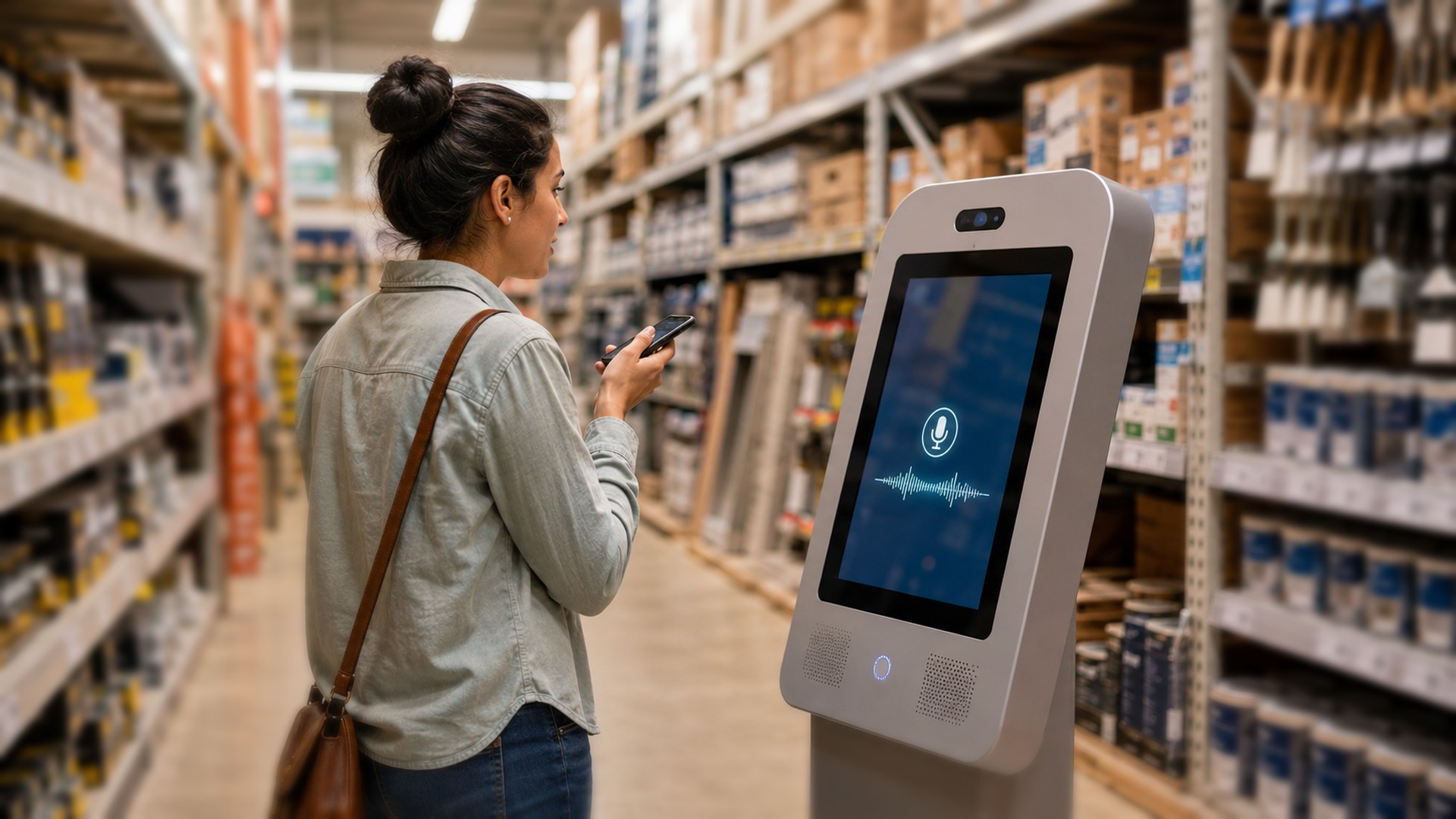
If a customer is standing in aisle 14 comparing three products, it is strange to ask them to pull out a phone, search the website, call the same store, scan a QR code, or download an app just to ask a basic question. Those steps may work for motivated customers. They do not work for everyone, and they do not work equally well when customers are confused, rushed, carrying things, managing kids, or trying to finish a job before the weekend disappears.
That is the opening for physical AI.
Physical AI does not have to mean robots
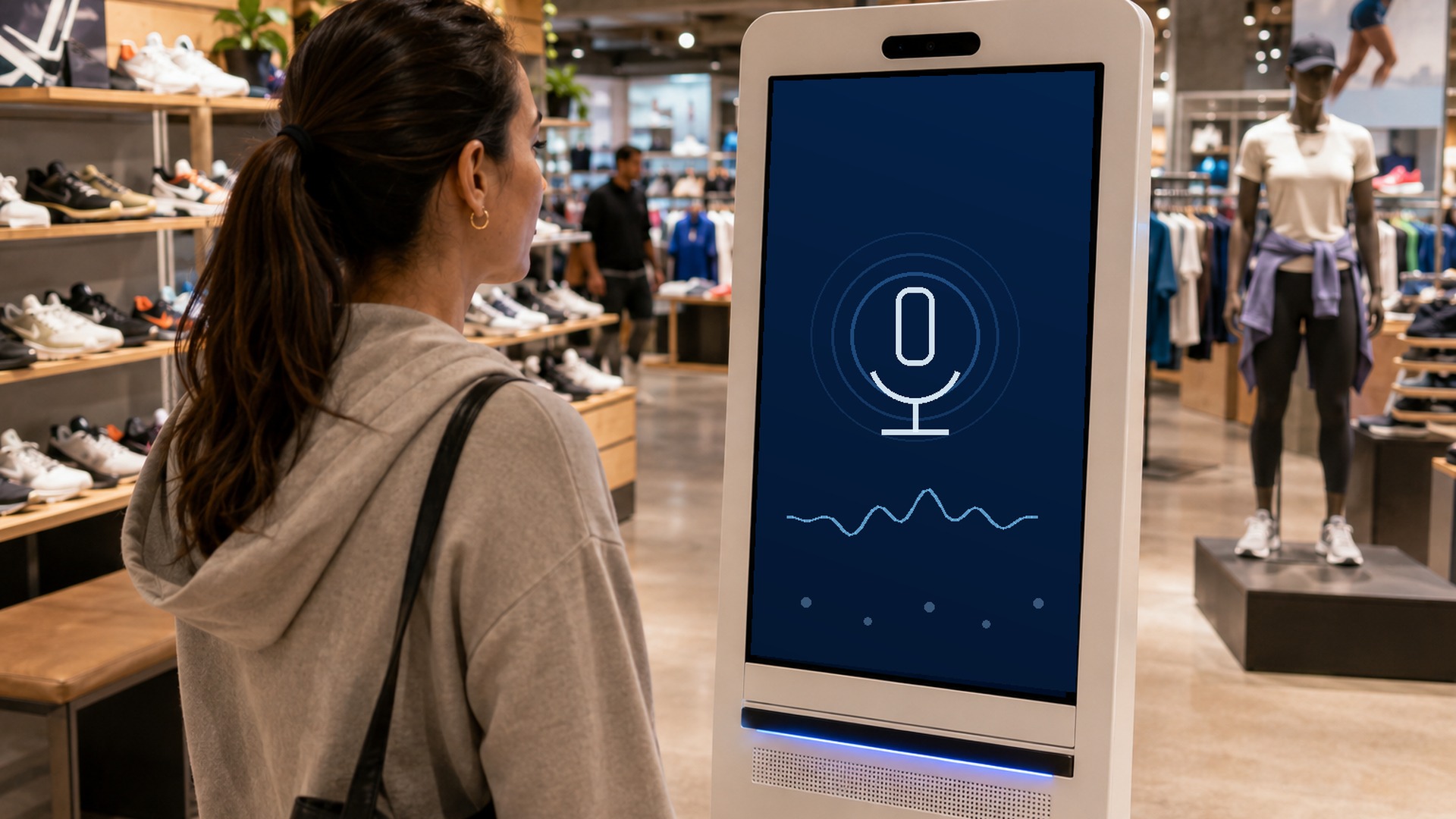
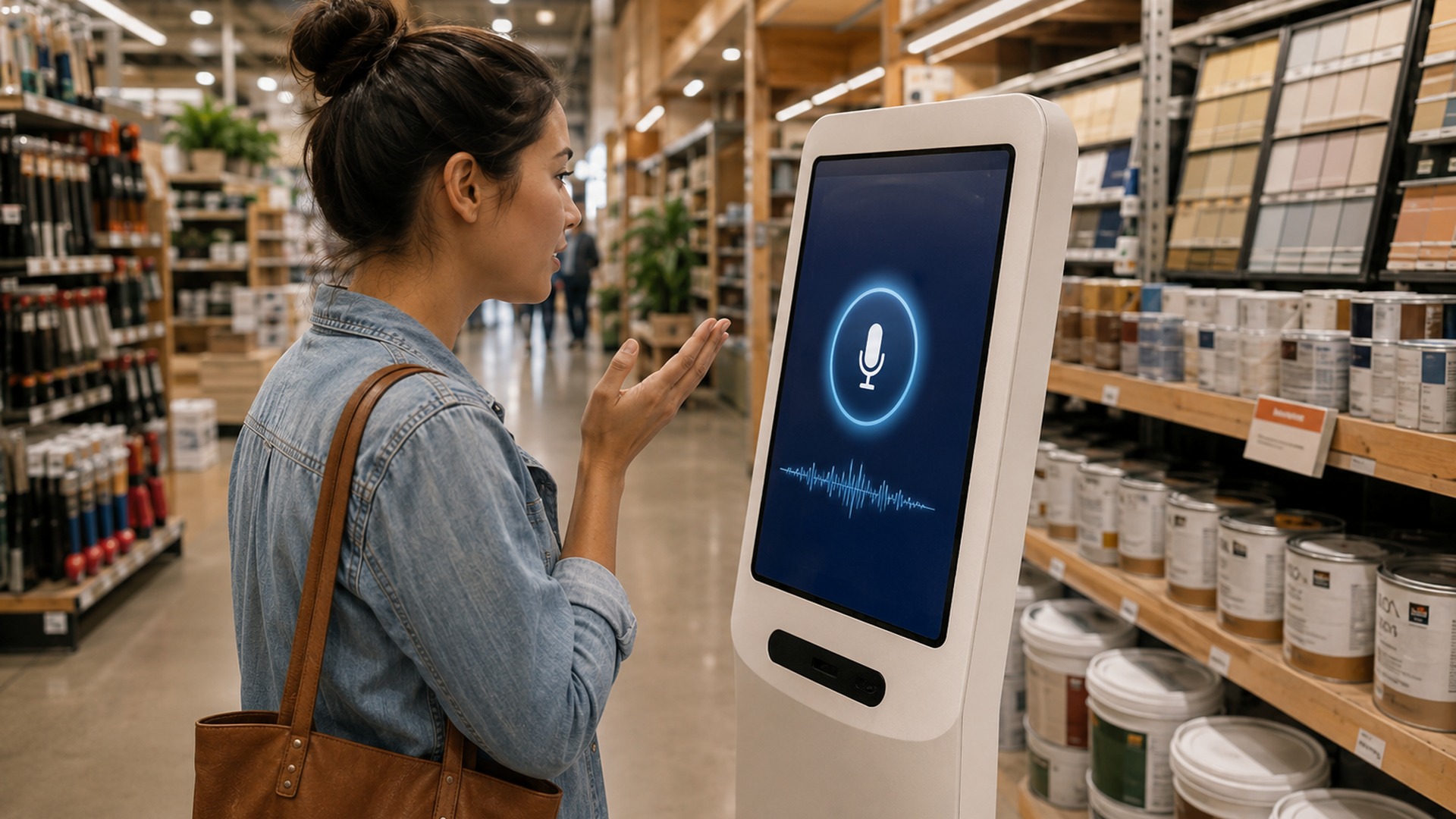
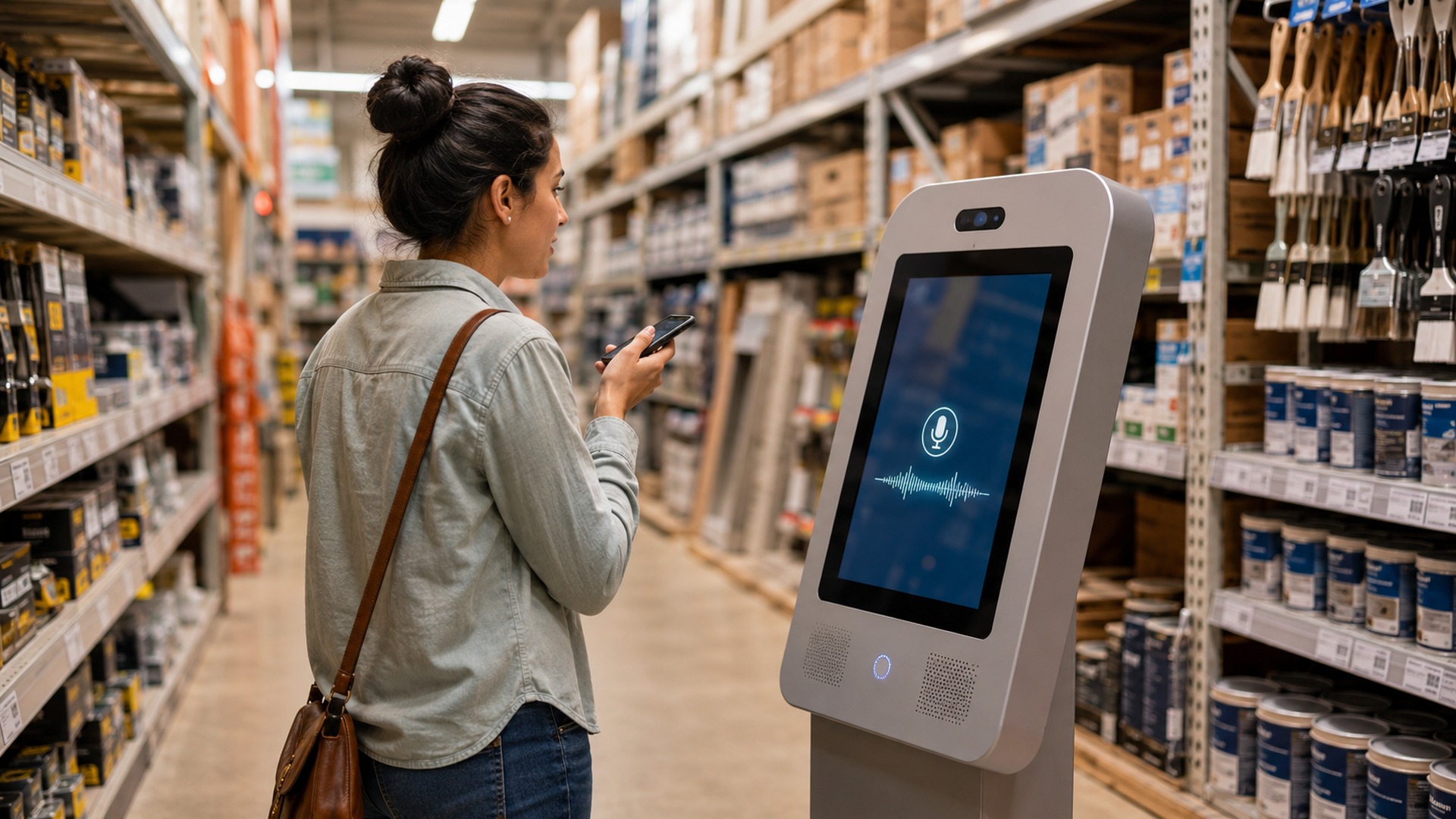
Physical AI in retail does not have to mean robots wandering the store. It can be much simpler and more useful than that: an in-store voice assistant, touchscreen, kiosk, product-guidance station, or AI sales associate that lives where customer questions happen.
The job is not to remove humans from the store.
The job is to catch more intent.
A good physical AI associate could answer repetitive questions, compare products, explain project steps, check local availability, suggest missing items, translate when needed, and call a human associate when judgment or trust matters. It could also capture the questions customers are asking and turn them into useful operational signal: which products confuse people, where signage fails, which projects create the most friction, and where staff are being pulled into the same conversations again and again.
That is very different from a chatbot bolted onto a website.
Retailers do not have a chatbot problem. They have a front-of-house knowledge problem.
The store is full of customer intent, but a lot of it disappears. A shopper gets confused, walks out, buys the wrong thing, waits too long, or interrupts an associate who is already helping someone else. The information is there, but the store often has no reliable way to hear it, structure it, and act on it in the moment.
AI voice starts to change that.
What retailers should measure
Retailers should be careful about how they measure success. The goal should not be “how many calls can we automate?” or “how many customers can we keep away from staff?” That framing leads to bad retail.
Better measures are more practical: Did the customer get the right answer? Did the system know when to hand off? Did associates get fewer low-value interruptions? Did customers buy the right full basket? Did the retailer learn something useful about demand, confusion, or service gaps?
Home Depot’s rollout matters because it points beyond deflection. It shows AI voice becoming an action layer: not just routing a customer, but understanding the job, checking the store context, starting the next step, and getting out of the way when a person should take over.
For physical retailers, the next move is not simply to copy Home Depot’s phone system. It is to ask where customers already need help and where the current interface makes that help harder than it should be.
Sometimes that will be the phone.
Sometimes it will be the associate’s handheld.
And increasingly, it will be the aisle itself.
At Biscuit, this is the part of retail AI we care about: not AI as a novelty, and not AI as a cheaper way to hide from customers. The opportunity is to give real customers in real places faster access to the knowledge, guidance, and human handoff they need.
The next wave of retail AI will be judged in the aisle, not just on the phone.