Helpful retail looks simple from the outside.
A customer asks a question. An associate gives the answer. The customer buys the right thing and leaves happy.
Anyone who has worked near a real store floor knows it is not that clean.
In hardware, the question is rarely just, “Where is the tape?” It is usually closer to: “I brought this part from home and need the thing that fits it,” or “I need to fix this leak, but I do not know what the broken piece is called,” or “Which product works outside, on this surface, in this weather, with this tool I already own?”
That is why Ace Hardware’s Hey ARMA rollout matters.
Ace announced Hey ARMA as an AI-powered assistant for its red-vested associates. The tool lives on handheld devices and gives associates real-time access to product knowledge, project advice, recommendations, and product comparisons. Ace also says it can help associates answer questions about items a customer may have purchased somewhere else.
That last detail is important. It shows the real problem Ace is solving.
Customers do not arrive neatly packaged around your catalog. They arrive with half a project, a broken part, a photo on their phone, a memory of what someone else told them, and a deadline. The associate’s job is to turn that messy situation into a confident next step.
This is not just an associate tool
Most people will read Hey ARMA as another employee copilot.
That is true, but it misses the larger point.
Hey ARMA is interesting because it admits that helpful retail has become a knowledge-at-the-edge problem. The edge is not a desk at headquarters. It is the aisle, the service counter, the paint desk, the garden center, and the moment when a customer is deciding whether to trust the store.
The scale of the knowledge problem is obvious. Modern Retail reported that a typical Ace Hardware store carries roughly 20,000 to 25,000 unique items, with more than 100,000 products in distribution centers. The same article noted that Ace is a cooperative with more than 5,200 independently operated stores, which means the company had to design the tool around local store realities, not a single top-down operating model.
That is a very different environment from a website search box.
A product page can assume the customer knows what to type. A store associate cannot. The associate has to interpret intent, local inventory, product compatibility, project risk, price, promotions, and the customer’s confidence level in real time.
Ace’s move is smart because it gives associates a better memory. It helps them get answers faster. It makes newer or cross-trained staff more useful. It also keeps the human relationship at the center, which is exactly how associate AI should start.
But there is still a gap.
The model still assumes the customer can find an associate at the moment they need help.
Labor pressure shows up as unanswered questions
Retail labor pressure is not always experienced by customers as a headline about hiring.
It is experienced as wandering the aisle and not finding anyone. It is waiting at the counter. It is asking one associate who is already helping two other people. It is hearing, “Let me find someone who knows that department.”
That does not mean associates are failing. It means the store is asking a small number of people to carry too much context at once.
Modern Retail quoted retail consultant Bryan Gildenberg making a useful point: a smaller Ace Hardware store may only have a couple of employees working at a time, covering multiple departments, while a larger home improvement store is more likely to have staff assigned to specific departments. That is the frontline reality behind the AI story.
The harder the category, the more expensive the service model becomes.
Hardware is a perfect example. It is not enough to know where the product is. The associate has to know whether it fits the job, whether another part is needed, whether the customer has the right tool, whether the product is safe for the surface, and when the customer should stop and call a licensed professional.
This is why the next move should not be associate AI only.
Associate AI is useful. Physical AI is the larger opportunity.
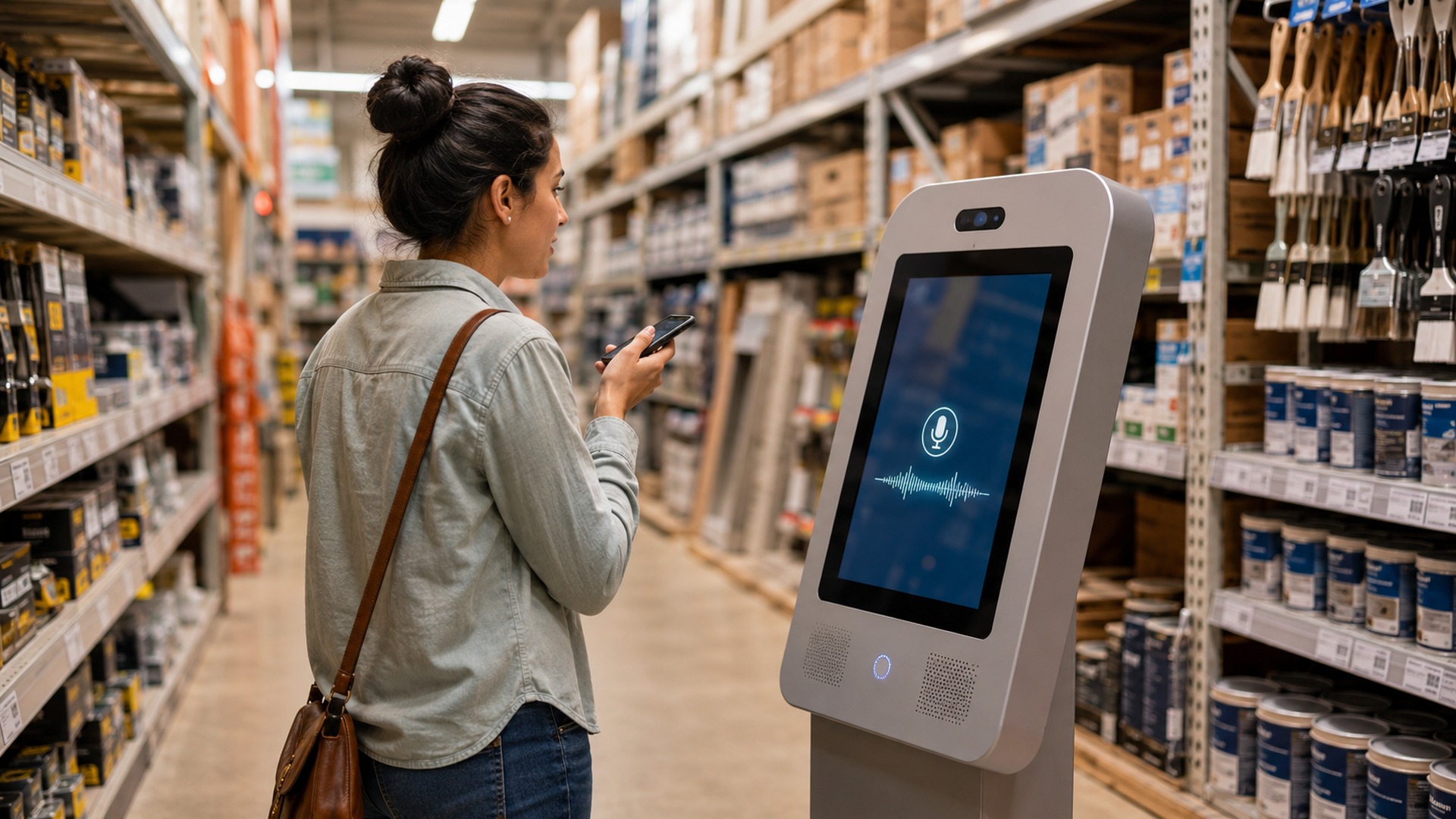
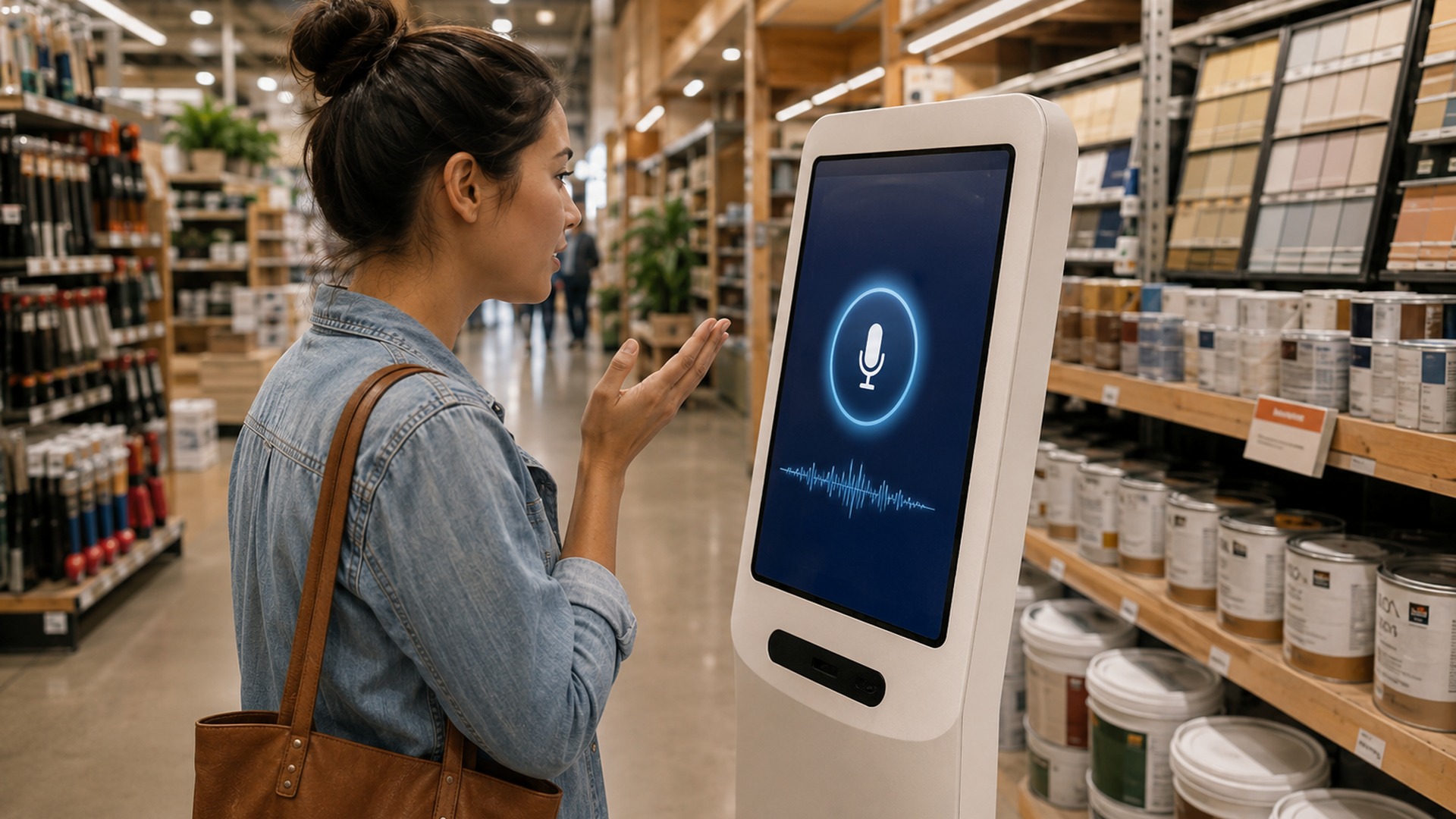
A customer-accessible physical AI associate could answer first questions directly in the aisle. It could compare products, explain tradeoffs, check local availability, suggest the missing item, translate the conversation, and ask enough clarifying questions to know when a human should step in.
Even better, it could hand the associate a useful summary: what the customer is trying to do, what products they looked at, what they are unsure about, and where the risk is.
That is not replacing the associate.
That is making the associate easier to find at the right moment, with the right context.
The better question is where AI should stand
Ace is right to keep the associate front and center. Retail Dive noted that Hey ARMA was active in more than 2,300 stores and that Ace positioned the tool as working in the background while store associates remain a crucial part of the shopping experience.
That is the right posture. Trust still matters. Judgment still matters. In a category like hardware, the human handoff is not a fallback. It is part of the service design.
But retailers should not stop at “AI in the associate’s hand.”
The practical question is: where does the customer’s confusion actually happen?
Sometimes it happens while talking to a staff member. In that case, an associate tool makes sense.
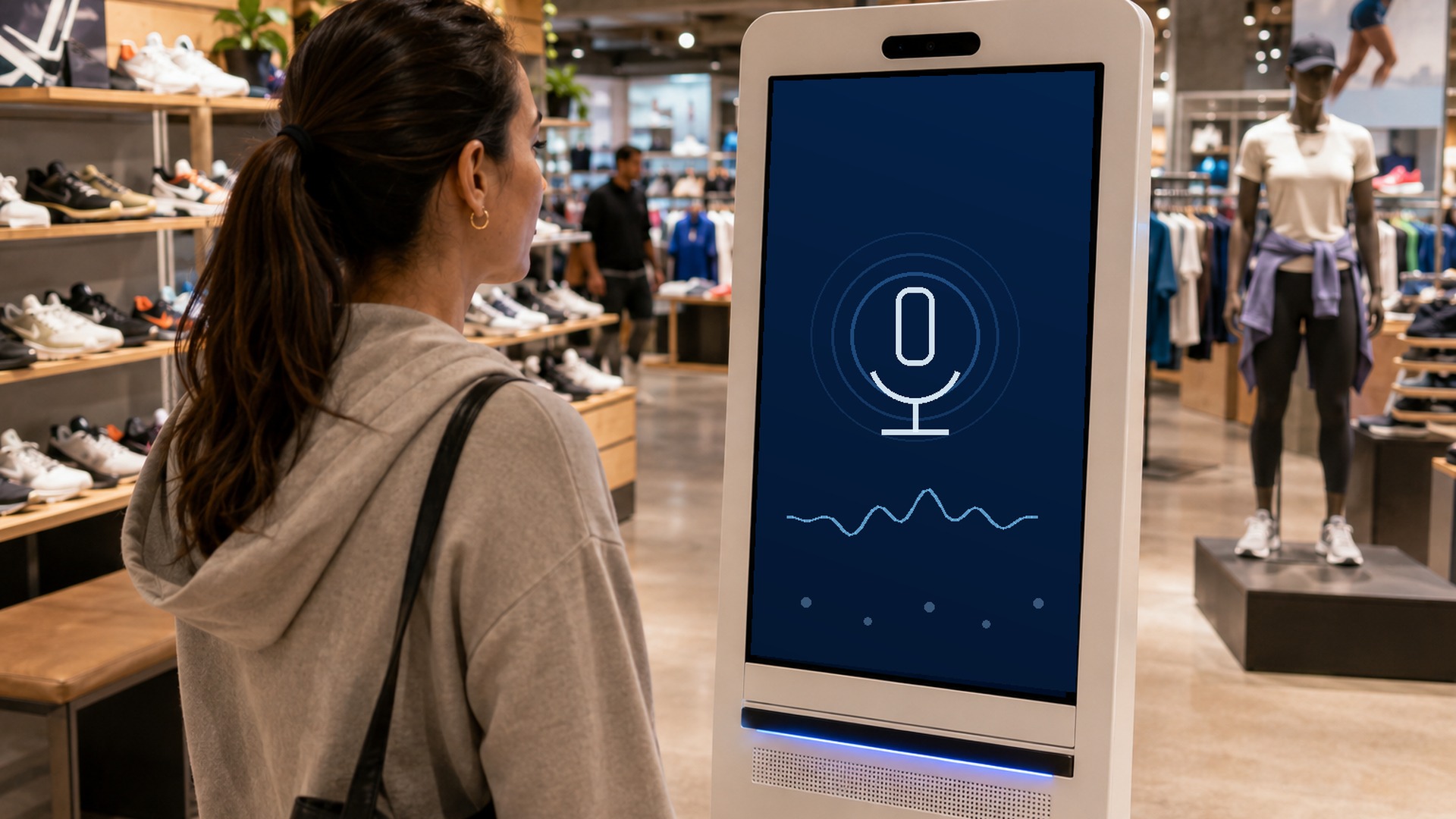
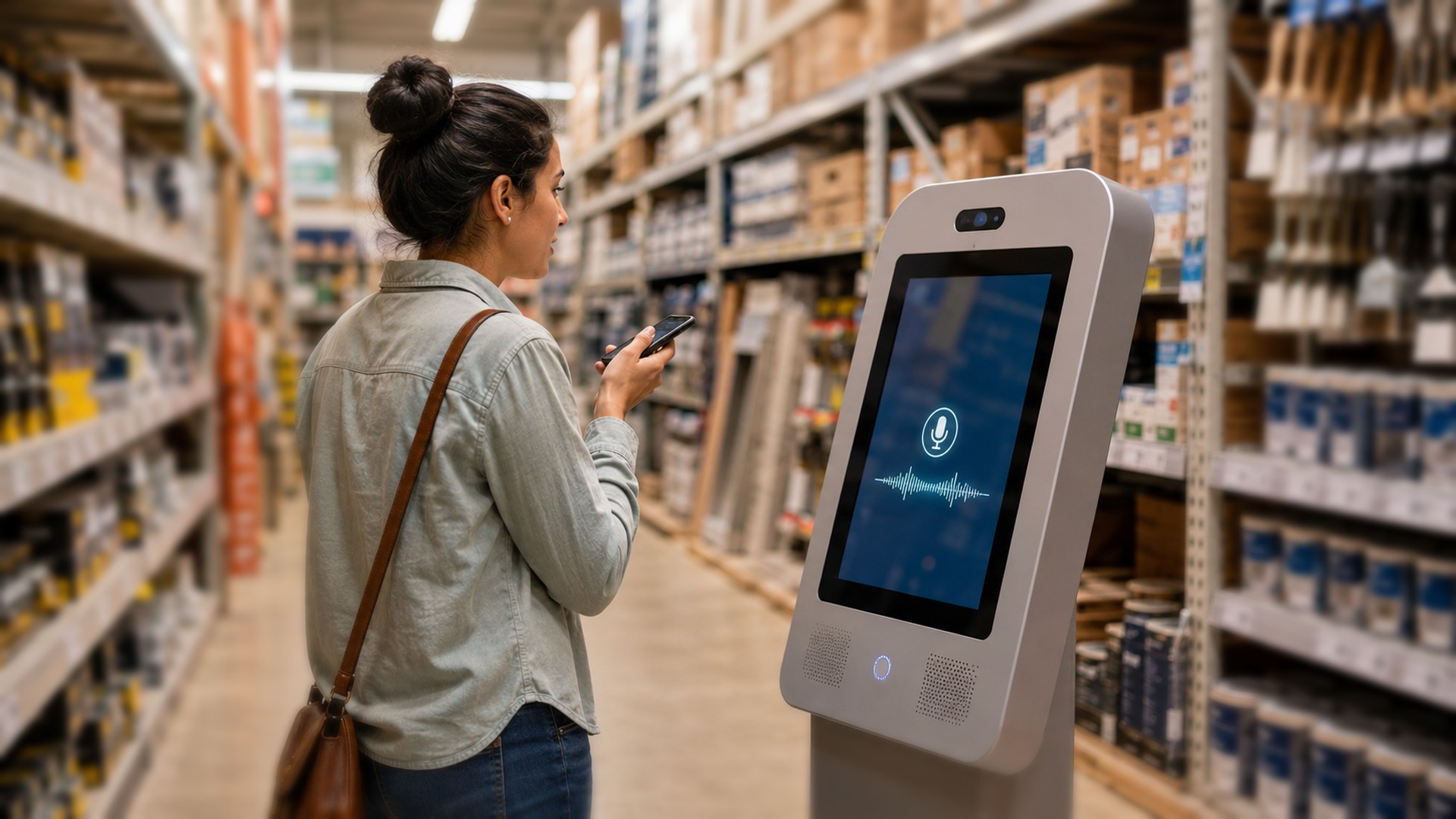
Sometimes it happens before the customer has found anyone. In that case, the store needs another surface for help: a kiosk, a voice station, a product-guidance screen, a service counter assistant, or another form of physical AI that can live where questions happen.
Good implementation should start with real store questions, not a technology demo. Retailers should listen for the repeated questions that drain associate time, the questions customers are embarrassed to ask, and the questions that usually end in a bad basket or a return.
Then they should decide what AI can safely answer, what it should only explain, and what must always go to a human.
That line matters.
AI can help with product discovery, comparison, location, inventory, project steps, and basic education. It should be careful around safety, installation, local regulations, warranties, and anything where bad advice creates real-world risk.
The goal is not a bot-only store.
The goal is a store where help is easier to reach.
Helpful retail needs more surfaces for help
Ace Hardware’s Hey ARMA is a strong sign that associate AI is becoming real store infrastructure. It also points to the next step.
If the problem is product complexity, customer confusion, and limited associate availability, then the answer cannot live only behind the counter or inside the employee device.
It needs to be in the physical customer journey.
That means AI that can stand in the aisle, hear the question, understand the project, connect to local store knowledge, and bring in the human when the conversation deserves one.
At Biscuit, this is the part of retail AI we care about: not AI as a way to remove service, but AI as a way to make service easier to find, easier to trust, and easier to improve.
Helpful retail is hard.
That is exactly why physical AI belongs in the store.