The best retail AI will not be the one that makes stores feel less staffed.
It will be the one that makes store work less chaotic.
That is the useful lesson from REI’s “green vest” argument. At NRF 2026, REI CEO Mary Beth Laughton said that as AI makes retail transactions easier, the company needs to lean harder into the human expertise of its store associates. Retail Dive reported her view clearly: REI’s green-vest associates are a key differentiator in an AI-driven world because they provide trust, lived outdoor experience, emotional connection, and services such as backpack fittings that a model cannot genuinely replicate. AI may be fast, but it has not gone hiking or camping.
That line is easy to turn into a simple human-versus-AI story.
It should not be.
The more practical reading is that AI changes which parts of retail work should be done by people, and which parts should not have to be.
If AI makes basic transactions, product discovery, and repeat questions easier, then the human associate becomes more valuable in the moments where trust matters. Specialty retail has always depended on those moments. A customer buying outdoor gear is not just buying a backpack, jacket, stove, or pair of boots. They are buying confidence that the product will work when the weather changes, the trail gets harder, or the trip is already underway.
That kind of confidence is not created by a product grid.
It comes from explanation, judgment, reassurance, and sometimes a person saying, “I have used this, and here is what I would do.”
AI should take pressure off the floor
The mistake is assuming that valuing associates means keeping AI away from the store floor.
The better move is to use AI to protect the work associates are best at.
Retail jobs are stressful because associates are constantly interrupted. They answer the same questions repeatedly. They search for inventory. They translate product names into customer problems. They deal with customers who are unsure, rushed, frustrated, or embarrassed that they do not know what to ask. They cover more categories than anyone can memorize. They are expected to be friendly, fast, accurate, and available, often while the store is understaffed.
That is not a healthy design for service.
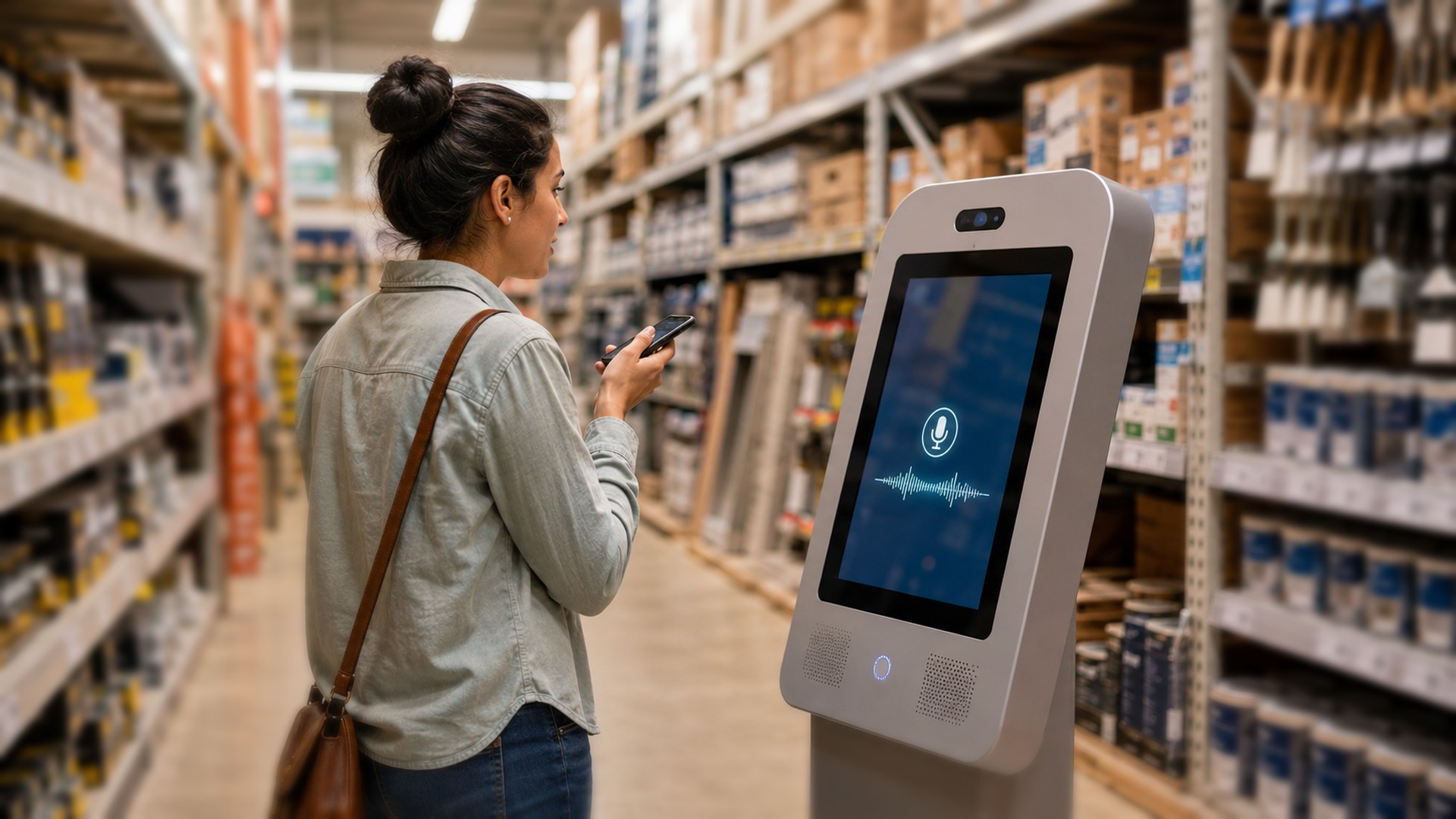
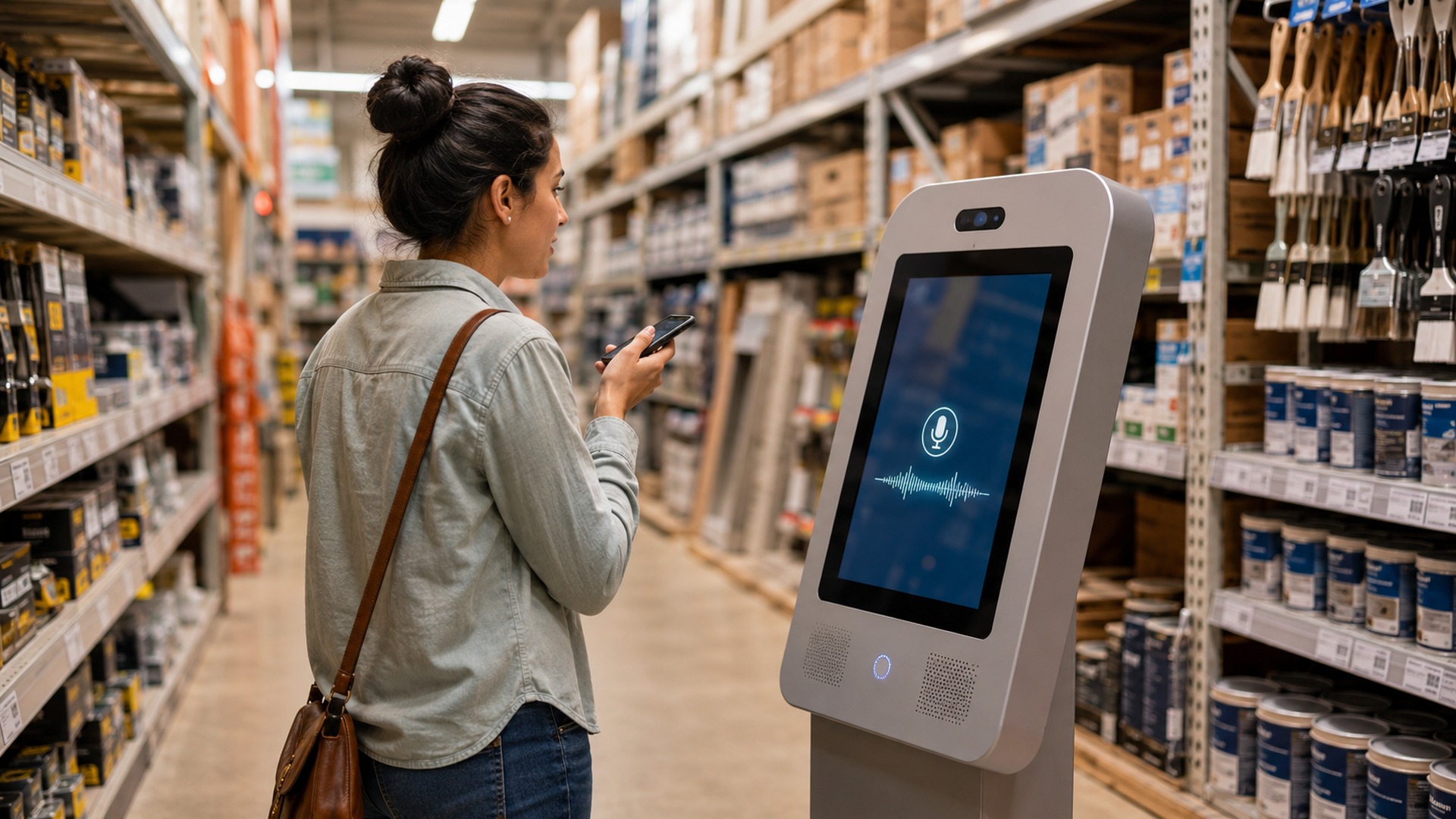
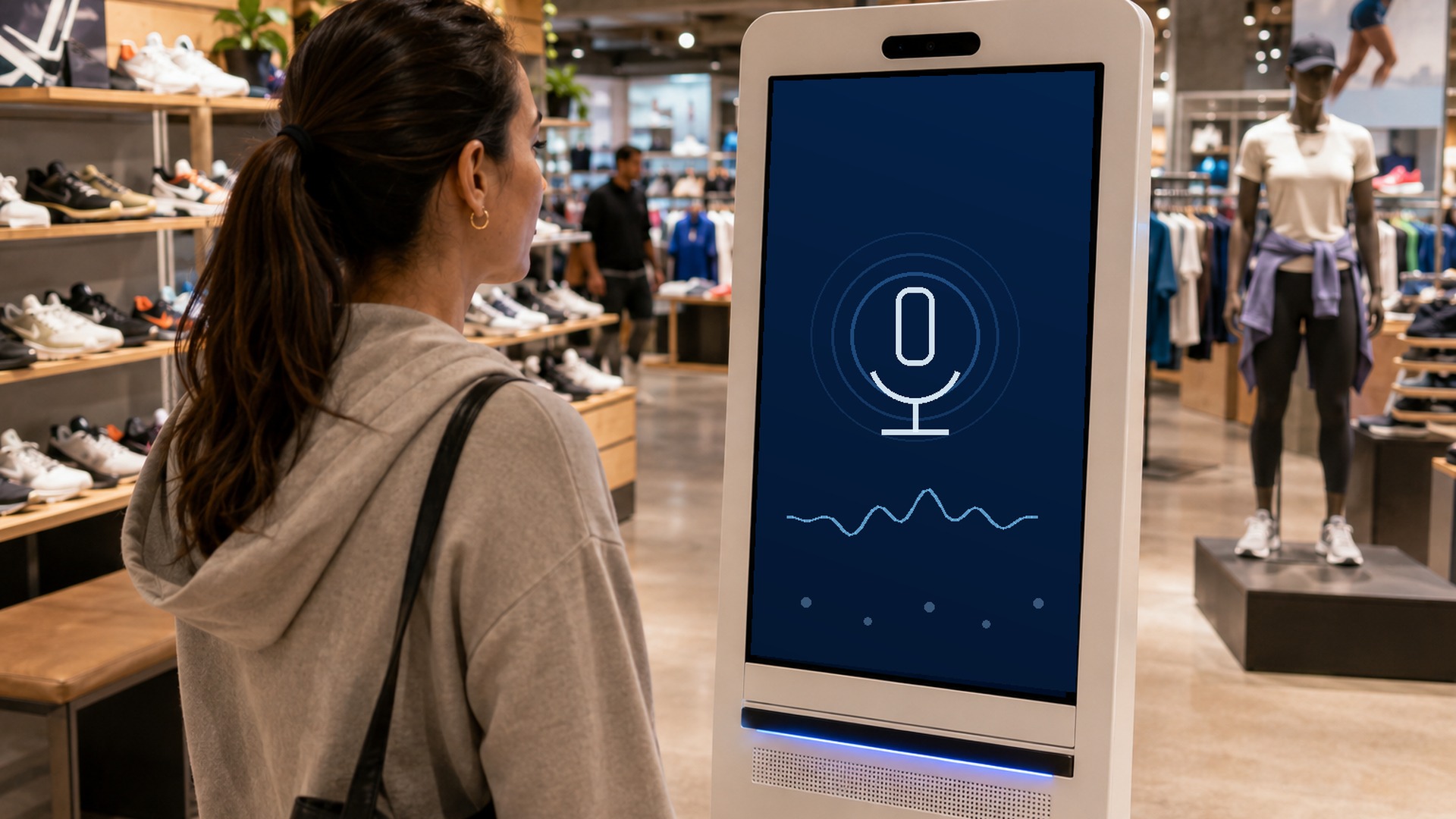
Physical AI can help by absorbing the lower-trust, high-volume work around the associate: basic product education, sizing explanations, inventory checks, store navigation, warranty questions, compatibility prompts, multilingual support, and “what do I need for this project?” guidance. It can qualify the customer’s need before a human steps in. It can reduce the number of times an associate has to stop a higher-value conversation to answer a simple location or availability question.
Done well, that does not make the associate less important.
It makes the associate easier to access for the work that actually needs a person.
The human advantage has to be designed into the system
NRF’s own coverage of Laughton’s session makes the broader point. REI’s Peak 28 strategy includes an emphasis on elevated service and experience, and Laughton described the company’s Green Vests as trusted guides who can be used across touchpoints, not just inside stores. REI has also begun integrating employee testimonials into product pages and videos, with Laughton saying the company is seeing conversion lift from that work. NRF framed the session around human connection in an era of technological advances.
That is an important signal for retailers.
The associate is not only a labor line. The associate is a source of trust, content, context, service consistency, and product confidence. AI should make that asset easier to use, not flatten it into scripts.
A bad implementation would use AI to monitor every interaction, push employees toward generic prompts, or make the store feel like a self-service warehouse with occasional human cleanup.
A better implementation would ask a different set of questions:
What repetitive questions are draining associate time?
Where do customers get stuck before they ever reach a person?
Which conversations require lived experience or judgment?
What should the AI handle alone, and what should it hand off?
What information should move with the handoff so the customer does not have to start over?
Those are store-design questions, not just technology questions.
Physical AI can make retail work healthier
This is where the labor story matters.
Most AI commentary still falls into one of two lazy categories. Either AI is coming to take retail jobs, or AI is a magic productivity layer that will make everything cheaper. Both miss the operating reality of stores.
A lot of frontline retail work is not hard because the questions are impossible. It is hard because the volume, pace, and context switching are relentless. The associate is not just giving product advice. They are also a wayfinding system, inventory interface, translator, returns desk, emotional buffer, and brand representative.
If physical AI can take some of that load, the workplace can get better.
Not because AI replaces care, but because it reduces the number of small frictions that make care harder to deliver.
A shopper who gets a quick answer from an in-store AI assistant about where to find an item, what size range to consider, or which accessories are commonly needed can approach the associate with a clearer question. An associate who receives the context from that AI interaction can spend less time diagnosing the basics and more time giving useful guidance. A manager who sees the aggregate questions can improve signage, training, merchandising, and staffing.
That is the healthier version of retail AI: fewer interruptions, better handoff, faster learning, and more time for the human work customers remember.
The real test is whether staff feel more capable
Retailers should not measure this only by automation rate.
That is the wrong north star.
Better measures are closer to the store floor: associate confidence, time to answer, customer wait time, handoff quality, training speed, repeat-question volume, basket completion, and whether staff feel less pulled in five directions at once.
REI’s point is not that AI does not matter. Laughton said the company cannot underestimate AI and expects it to touch every part of the retail journey. The point is that when AI becomes table stakes, human trust becomes more valuable, not less.
That is the opportunity for physical AI.
Not bot-only stores. Not fewer people hiding behind more screens. Not AI that makes frontline work feel watched, scripted, or replaceable.
The opportunity is to build stores where AI handles the repetitive edge of service and humans have more room to be useful.
At Biscuit, that is the version of retail AI worth building toward. The future store should not be less human because it has more AI. It should be more helpful because the people inside it are better supported.