Lowe’s Mylow Companion is easy to describe as an associate copilot.
That is right, but it misses the larger retail lesson.
The useful part is not just that Lowe’s gave associates an AI tool. The useful part is that Lowe’s put store knowledge closer to the moment of customer need: on the sales floor, inside complex categories, in the hands of people being asked to answer questions all day.
That is where retail AI starts to matter.
Lowe’s launched Mylow Companion in May 2025 as an AI assistant for retail associates, built for the sales-floor devices they already use. The company said the app gives associates fast access to product details, project advice, and inventory information across more than 1,700 stores. It also supports natural, conversational prompts, including voice-to-text for faster use when associates are helping customers on the move. Lowe’s framed the rollout as a way to improve customer service, speed onboarding, and make associates more knowledgeable regardless of tenure.
That last word matters: tenure.
Home improvement is not simple retail. A customer may walk in with a broken part, a half-described project, a photo on their phone, or a question that crosses plumbing, paint, hardware, flooring, and installation. Even experienced associates cannot carry every SKU, compatibility rule, attachment, aisle location, and project path in their heads.
Retail Dive captured the same point in March, reporting that Lowe’s executives see home improvement as an inherently complex retail category and that the company had extended Spanish text and audio capabilities to Mylow Companion in February 2026. Lowe’s later highlighted the team behind Spanish translation inside the associate app, positioning language access as part of customer service in stores.
This is not a novelty feature.
It is knowledge at the edge.
What most people will read wrong
The obvious reading is that Mylow Companion is an efficiency tool for employees.
It is. But that is still too narrow.
The better reading is that Lowe’s is proving there is a real place for AI associates in physical retail sales and service. Not as a replacement for the person in the red vest. As support for the hard parts of the job: understanding vague customer intent, explaining unfamiliar products, finding inventory, recommending missing items, and helping newer or cross-trained staff answer with confidence.
Lowe’s has also reported useful commercial signals. In its Q3 2025 earnings transcript, the company said Mylow and Mylow Companion were answering nearly one million questions per month across product specs, project know-how, and order status. Lowe’s also said online Mylow engagement more than doubled conversion, and that associate use of Mylow Companion in stores increased customer satisfaction scores by 200 basis points. Those are company-reported numbers, but they point to a practical truth: when customers get better guidance, they make better decisions.
That is the point retailers should sit with.
AI is not valuable because it can generate an answer. AI is valuable when the answer helps someone make progress in the real world.
The friction is still there
Mylow Companion is a strong associate tool. It also exposes the next gap.
If the associate has the AI, the customer still has to find the associate.
That sounds obvious, but it is the daily friction of physical retail. The customer is already standing in the aisle. They may be comparing two products, holding a part, trying to understand a label, or deciding whether they are missing a tool for the project. At that moment, asking them to pull out a phone, open an app, scan a QR code, search a website, or call the store they are already standing inside is still friction.
Some customers will do it.
Many will not.
They will guess. They will abandon the purchase. They will wait for an associate. They will buy one item and miss the attachments. Or they will take the question to a marketplace, search engine, or third-party AI assistant that does not own the store experience.
That is the space for physical AI.
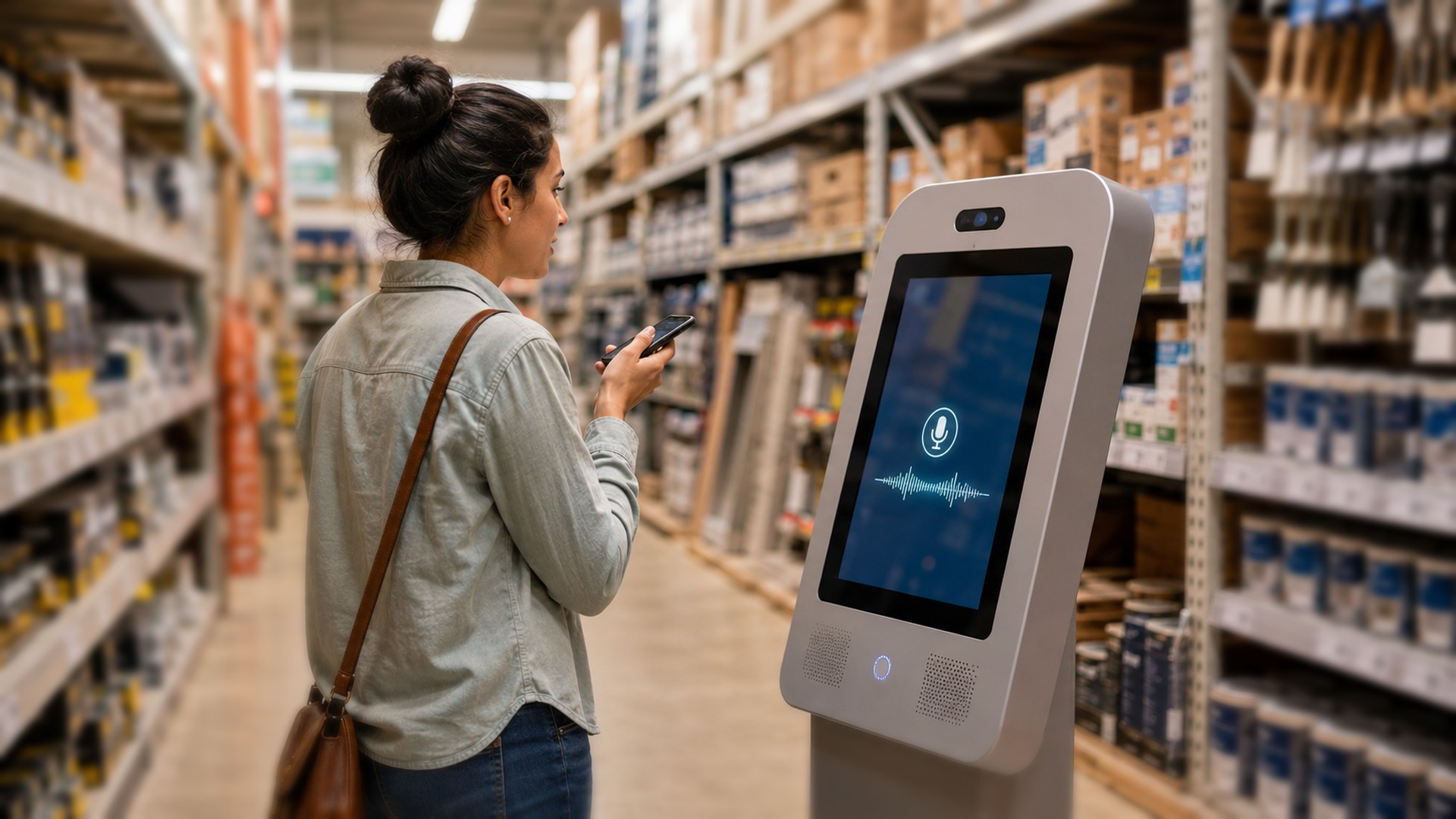
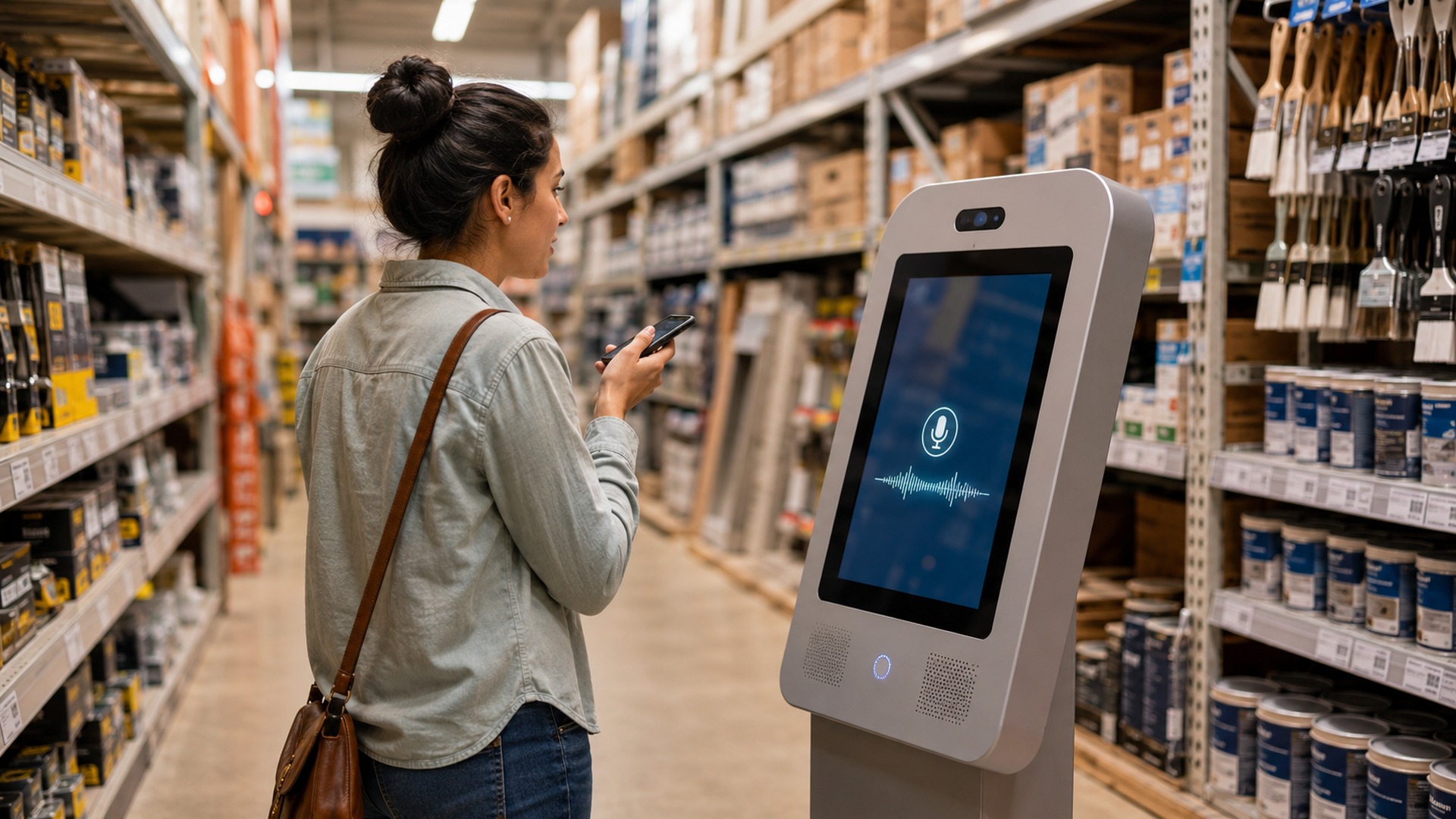
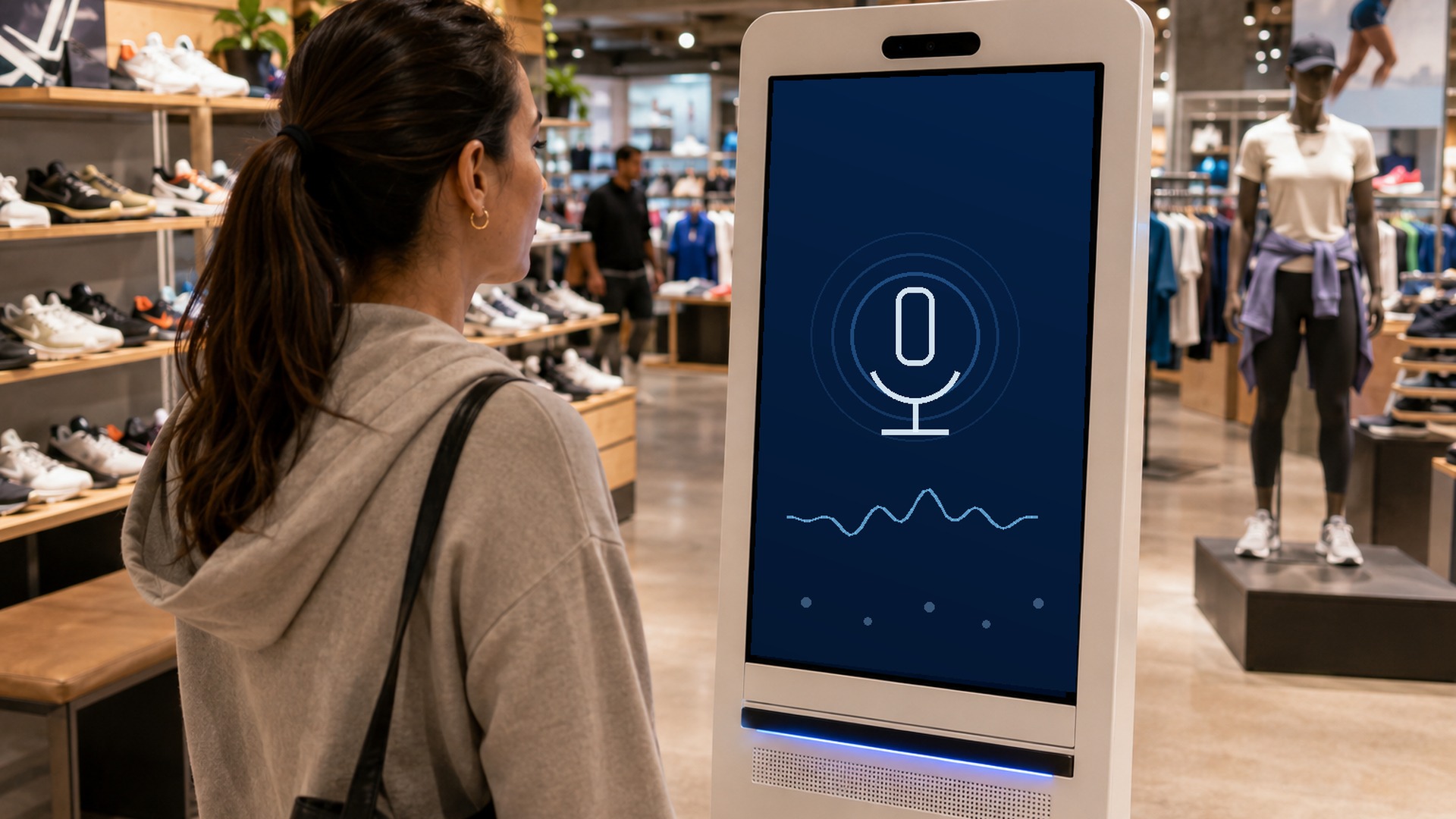
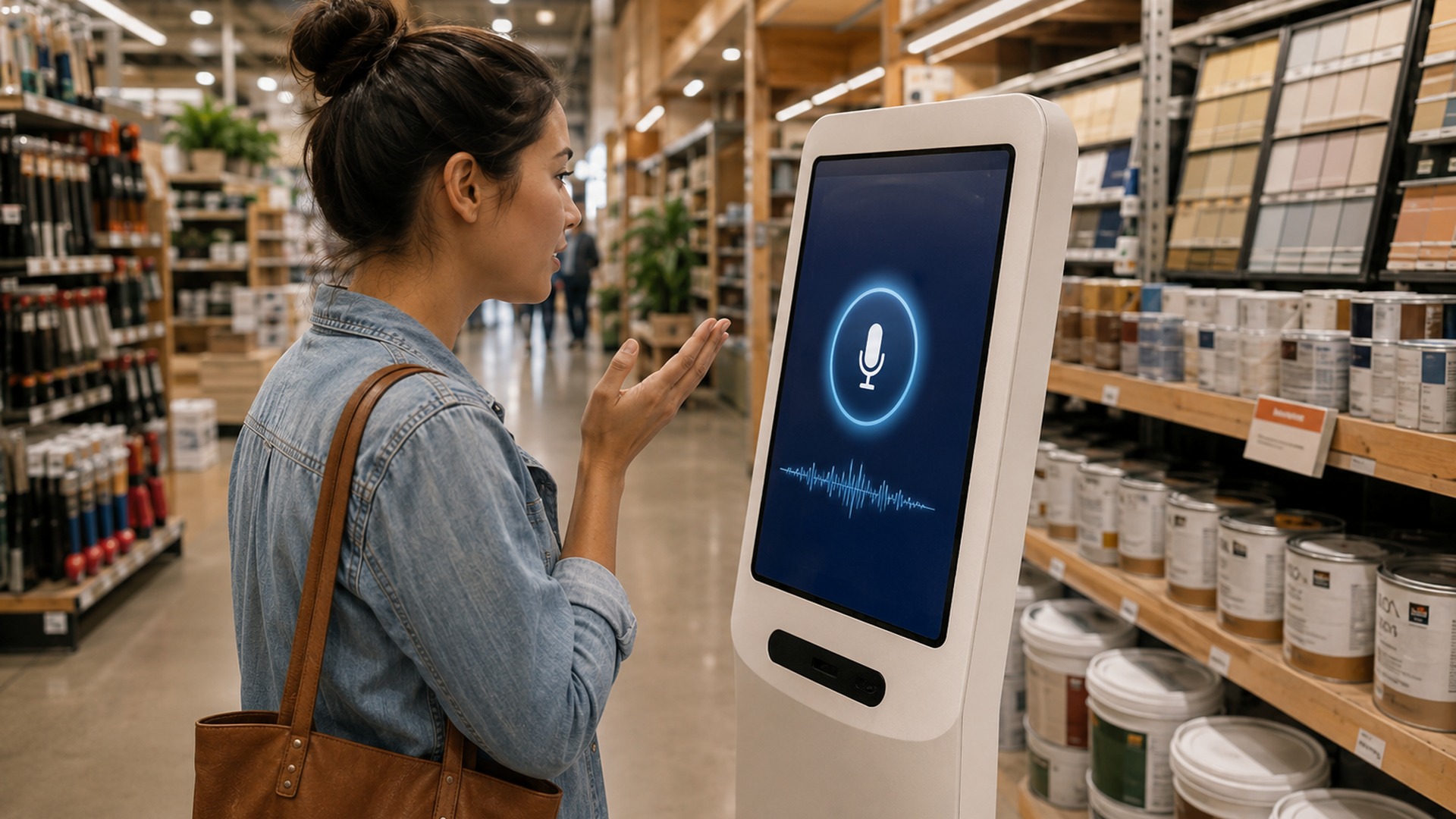
A physical AI associate could sit in the aisle, service desk, department entrance, garden center, paint area, or pickup zone. It could answer basic and mid-level questions directly. It could help a customer compare products, understand project steps, check local availability, translate instructions, or build a better basket. When the question needs human judgment, it could call the right associate with context instead of making the customer start over.
That is not anti-associate. It is the opposite.
It protects the associate from being the only interface for every repeated question in the building.
Voice matters because the store is physical
Lowe’s decision to support voice-to-text inside Mylow Companion is important because stores are not desks. Associates are walking, carrying, scanning, pointing, restocking, and helping more than one customer at a time. Typing is not always the natural interface.
The same is true for customers.
A customer in a home improvement aisle often does not know the right keyword. They know the problem: the faucet is leaking, the paint peeled, the dog scratched the door, the shelf fell, the grout cracked, the plant keeps dying. Voice lets the customer describe the situation the way they would describe it to a person.
That is why AI in stores should not be designed like a website widget. It needs to understand incomplete language, messy intent, local inventory, store layout, project context, and when to hand off to a human.
The retailers that get this right will not just add AI to the store. They will redesign the help layer of the store.
What retailers should do next
Retailers looking at Mylow Companion should start with the operational problem, not the model.
Where do customers get stuck? Which questions are associates answering all day? Which categories require explanation before purchase? Which departments have the highest training burden? Where does language access affect service? Where do customers abandon because the next step is unclear?
Then decide where AI should live.
Sometimes it belongs on the associate device. Sometimes it belongs in the call center. Sometimes it belongs online. But in physical retail, there will be more moments where the right answer is: put the AI where the customer is already standing.
That does not mean every aisle needs a screen. It means retailers should stop assuming the customer’s phone is the only interface. The store itself can be the interface.
Mylow Companion is a strong signal because it shows that AI can support sales and service in a category where expertise matters. The next step is to reduce the friction between the customer and that support.
At Biscuit, this is the part of retail AI we care about: real customers, real questions, real stores, and better human handoff. AI should make associates more confident, not less necessary. It should make customers more informed, not more isolated. And when the customer is already in the aisle, the help should be there too.