Burger King’s Patty assistant is a labor story.
It is also a customer story waiting to happen.
The company is testing an OpenAI-powered voice assistant inside employee headsets at 500 U.S. restaurants. The system, called Patty, sits inside the broader BK Assistant platform and is meant to help restaurant teams with real-time operational work: product details, item preparation, inventory issues, equipment alerts, unavailable menu items, digital menu updates, and drive-thru audio analysis for order accuracy and coaching. Nation’s Restaurant News described it as a voice AI system inside cloud-connected headsets. Restaurant Dive reported that Burger King wants the platform to unify point of sale, kitchen equipment, inventory, and digital ordering into one command center.
That makes sense. Quick-service restaurants are noisy, fast, and unforgiving. A manager should not have to stop the floor to answer every prep question, chase every stockout, or manually remove unavailable items from every ordering channel. A crew member should not have to choose between helping the next guest and finding the right answer.
AI can help there.
But the more interesting question is not only what Patty can whisper into an employee’s ear.
It is what customers could learn if the same intelligence were available directly at the moment of ordering.
The obvious read is worker monitoring
Most people will focus on the headset.
That is understandable. AP reported that Patty can track when employees use words like “welcome,” “please,” and “thank you,” and share that information with managers. Burger King said the intent is coaching, not tracking individual employees, and said hospitality is fundamentally human. AP also reported that Patty can alert managers when inventory is low, respond to QR-code-reported facility issues, answer menu-item questions, and remove unavailable items from digital menus when ingredients run out.
This is the line retailers and restaurant operators have to handle carefully.
Frontline AI should reduce pressure on staff. It should not turn every interaction into a scorecard. If workers experience AI as surveillance, the technology will create resistance even when the operational use case is real.
That does not mean headset AI is wrong. It means the implementation matters. AI that helps a team answer questions, reduce mistakes, and keep service moving is very different from AI that makes workers feel watched, scripted, or replaceable.
The better frame is not “AI versus employee.”
The better frame is: where should intelligence live so the experience gets easier for the customer and healthier for the team?
Customers need education too
Burger King’s current approach puts the intelligence behind the counter.
That is useful, but it leaves a gap. Customers still have questions before they order. They want to know what is in something, what can be customized, what is available, what is faster, what fits a dietary preference, what is new, or what is different between two choices.
Today, those questions either go to a busy employee, get skipped entirely, or turn into hesitation at the speaker, counter, kiosk, or drive-thru window.
That is a bad place for confusion.
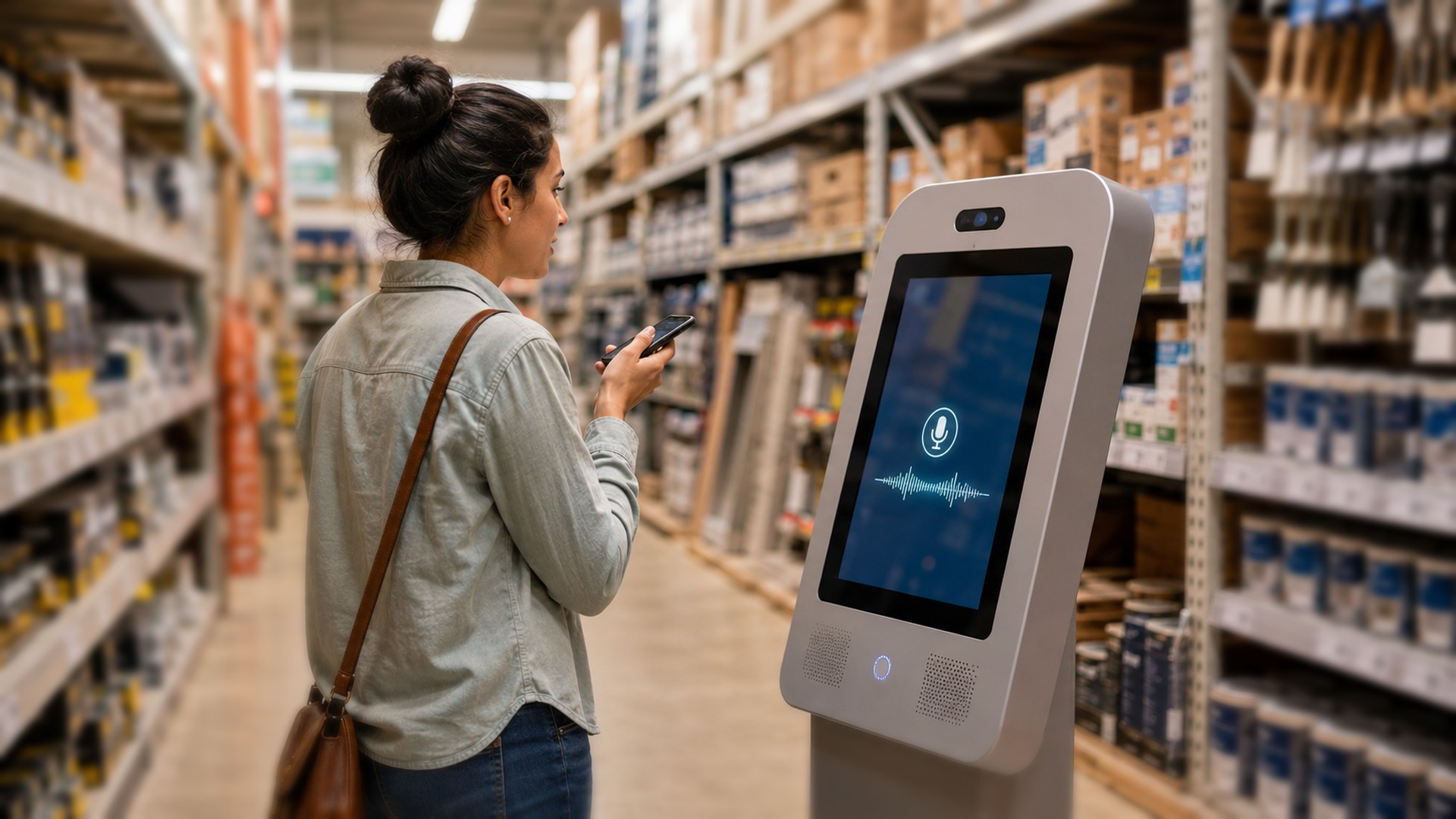
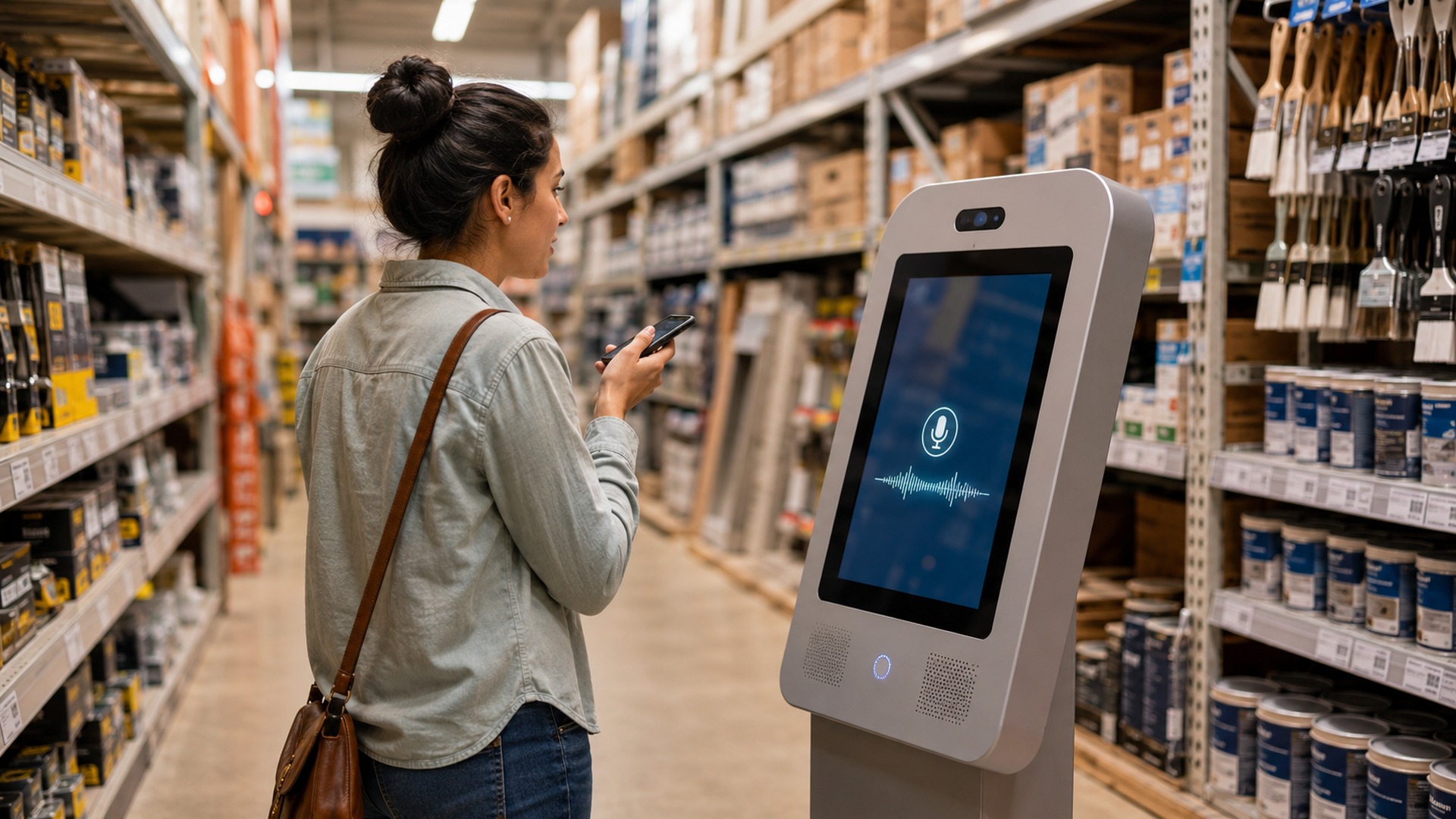
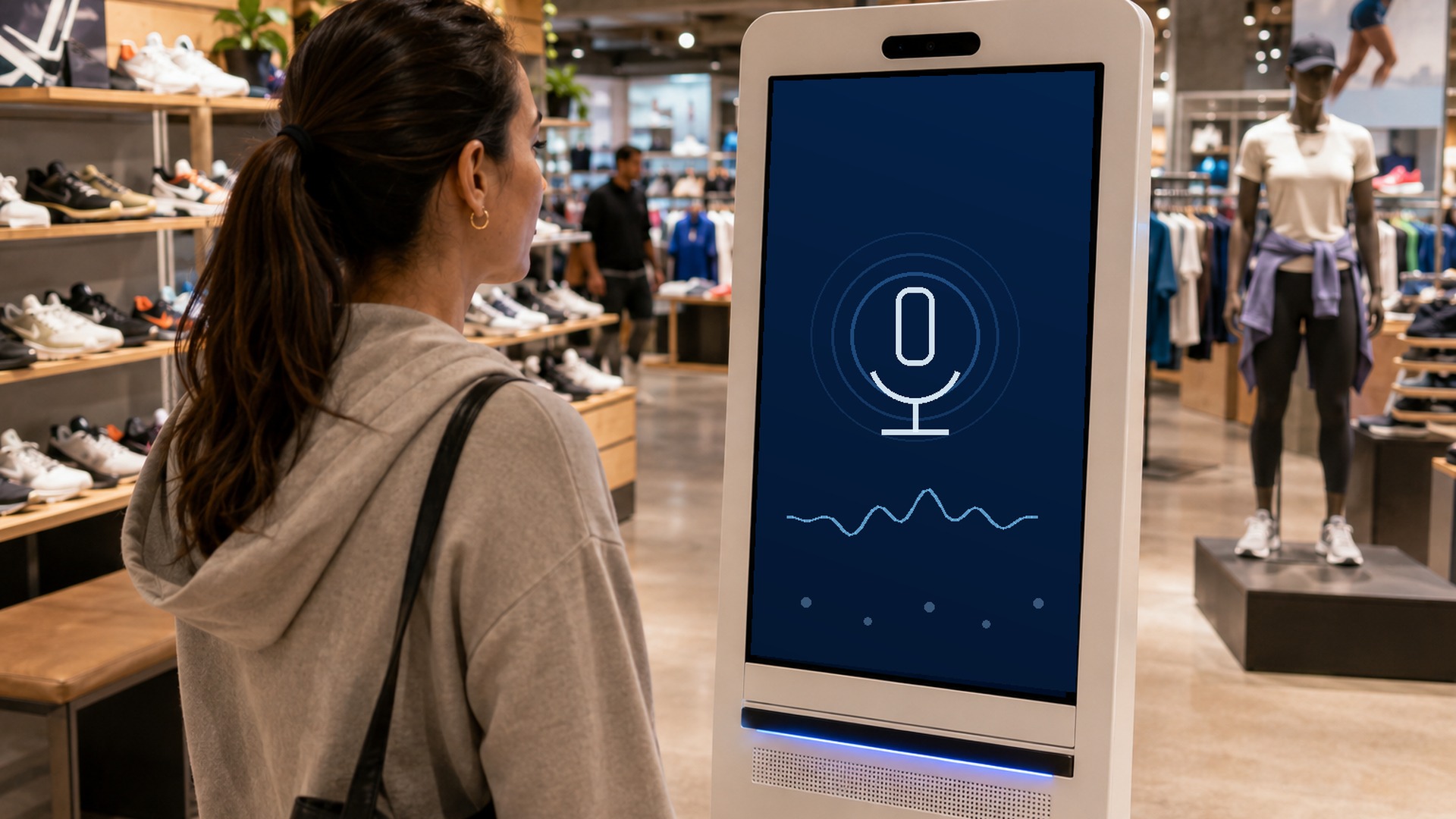
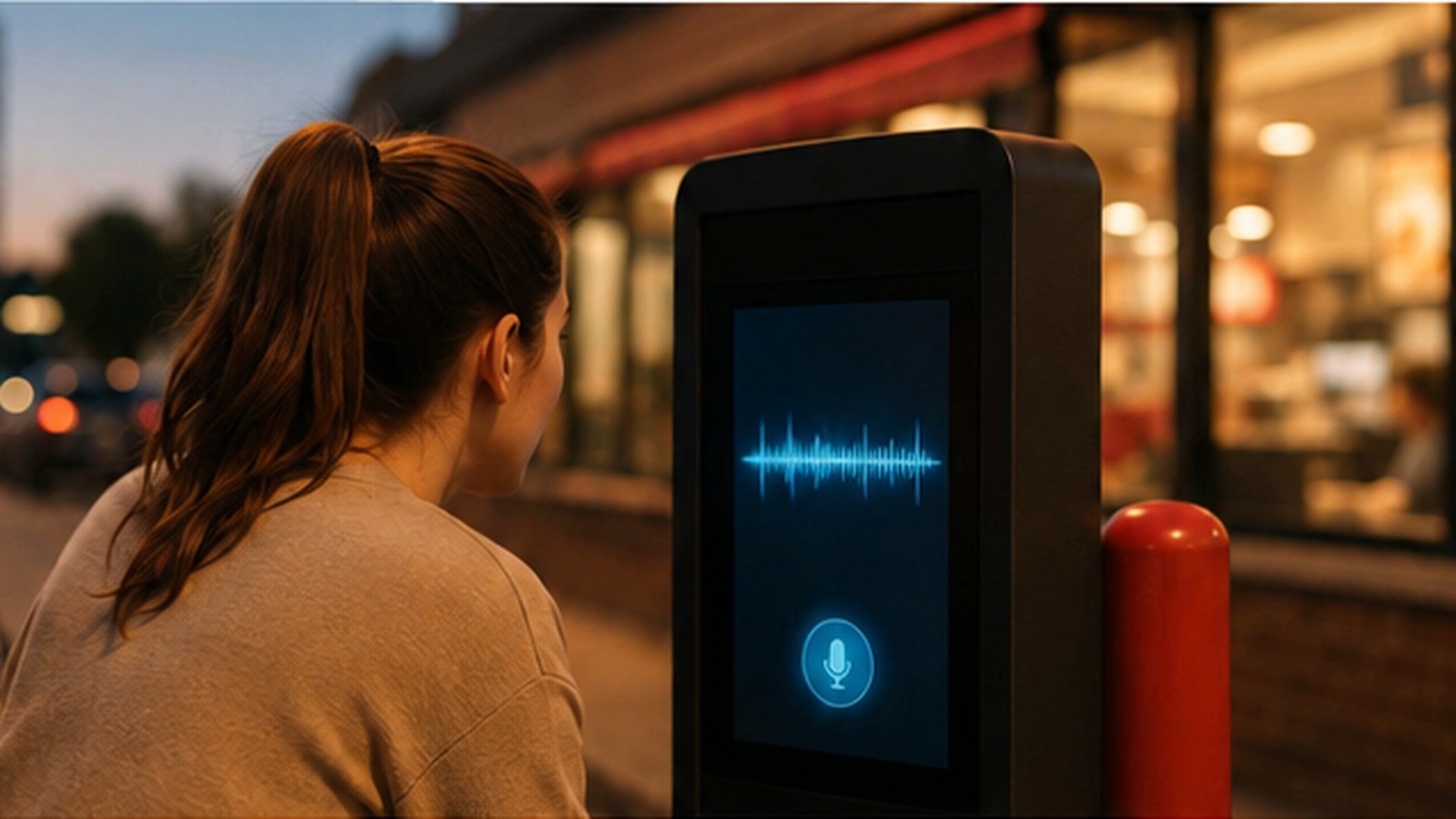
A customer-facing physical AI assistant could handle that education before the bottleneck. It could explain the menu, answer ingredient questions, compare options, describe customizations, flag unavailable items, translate for multilingual guests, and help someone decide without turning the interaction into a rushed guessing game.
The goal should not be to push the largest order.
The goal should be to help the customer choose with confidence.
That distinction matters. If customer-facing AI is designed only as an upsell machine, people will learn to distrust it. If it is designed as a service layer, it can reduce pressure on staff and improve the quality of the order.
The Verge reported that Burger King is testing AI drive-thru technology in fewer than 100 restaurants, while a company executive said the brand is still being cautious because not every guest is ready for it. That caution is reasonable. Not every customer wants to talk to an AI at the drive-thru. But that is not an argument against customer-facing AI. It is an argument for designing it as optional, visible, and useful.
Good physical AI should protect the human interaction
The best physical AI in restaurants and stores will not be the one that removes the human.
It will be the one that makes the human interaction better.
In a quick-service restaurant, that might mean a voice assistant that answers menu questions before the customer reaches the cashier. It might mean a drive-thru assistant that helps a customer understand customizations before the line slows down. It might mean a kiosk that explains ingredients without making the customer dig through fine print. It might mean a manager-facing system that removes out-of-stock items everywhere at once, so employees stop apologizing for things the system should already know.
In retail, the same pattern applies.
Customers need help at the point of confusion. Associates need relief from repetitive questions. Managers need cleaner operational signals. The store needs a way to hear what customers are asking before that intent disappears.
That is why the Burger King story matters beyond restaurants.
It shows that voice AI is starting to live inside real frontline environments: headsets, kitchens, counters, drive-thrus, inventory systems, digital menus, and customer conversations. This is not abstract chatbot territory. It is physical retail and hospitality work.
But if all the intelligence stays behind the counter, the customer is still left guessing.
What retailers should measure
Retailers and restaurant operators should not measure these systems only by automation rate or average order value.
Those numbers matter, but they are incomplete.
A better scorecard would ask: Did the customer understand their options? Did the order become more accurate? Did staff get fewer repetitive interruptions? Did the system know when to hand off to a person? Did the customer feel helped or pushed? Did managers get useful operational signal without creating a surveillance culture?
That is the practical test.
AI in physical retail should make service easier to deliver and easier to receive. Sometimes that means helping the employee. Sometimes that means helping the customer directly. Often, it means doing both and designing the handoff between them properly.
At Biscuit, this is the part of AI in retail we care about: not replacing hospitality, but making it easier to deliver in real places. The next wave of retail AI will not be judged by whether it can sit in a headset or answer a question.
It will be judged by whether customers and staff both leave the interaction with less friction than they had before.