Agentic commerce is easy to frame as a checkout story.
That is the most obvious reading. It is also the least useful one for physical retailers.
Microsoft used NRF 2026 to announce new retail AI capabilities, including Copilot Checkout. The basic idea is simple: a shopper discovers a product inside Copilot and can complete the purchase without being redirected to a retailer’s website. Microsoft says merchants remain the merchant of record, and its launch partners include PayPal, Shopify and Stripe. Microsoft’s announcement also named Urban Outfitters, Anthropologie, Ashley Furniture and Etsy sellers among the early retail participants.
Microsoft Advertising went further, saying Copilot Checkout lets merchants own the transaction, customer data and customer relationship while making purchases possible inside the AI conversation. It also introduced Brand Agents, which are meant to bring AI-powered guidance to a retailer’s own site. That framing is important because it shows the tension at the center of agentic commerce: retailers want the reach of third-party AI assistants, but they do not want to become invisible inventory behind someone else’s interface.
That tension matters more than the checkout button.
The strategic question is not, “Can a customer buy inside Copilot?”
The better question is, “Where does the customer relationship live when an AI agent is doing the discovering, comparing, explaining and purchasing?”
Checkout is not the customer relationship
A transaction is only one moment in the buying journey. The relationship is built earlier.
It is built when the customer is trying to understand the difference between two products. It is built when they are unsure whether something will fit, work, match, last or solve the actual problem they have. It is built when a retailer gives the customer confidence instead of just giving them options.
Agentic commerce compresses those moments. Instead of browsing a site, reading reviews, comparing tabs and deciding where to buy, the customer may ask an AI assistant to recommend, narrow, rank and purchase. That can be convenient. It can also move a lot of influence away from the retailer.
Axios captured the risk plainly: if checkout happens inside AI conversations, retailers may lose direct customer relationships while platforms gain leverage. Its coverage also noted the distinction that matters here: retailers may remain the merchant of record while Microsoft controls the interface.
That distinction is not academic. The interface shapes what the customer sees, what gets compared, what questions get asked, what tradeoffs are explained and which brand has the chance to build trust.
To Microsoft’s credit, the company is trying to reassure merchants that they keep the transaction and data. But the bigger issue is not just data ownership. It is customer understanding.
Did the retailer hear the question?
Did the retailer see why the customer hesitated?
Did the retailer learn what else the customer was considering?
Did the retailer have a chance to explain the difference between a cheap product and the right product?
In physical retail, those questions are not soft brand concerns. They are operating questions.
The store becomes more important, not less
Agentic commerce does not make stores irrelevant. I think it makes them more strategically important.
If AI assistants become the front door for more online discovery, the physical store becomes one of the few places where a retailer still controls the environment, the service model and the customer relationship. It is where the customer can touch the product, ask a messy question, compare options in context and decide with confidence.
NRF’s consumer research with IBM is useful here. It found that nearly three-quarters of consumers still shop in stores, even as AI-assisted shopping grows. The same summary said 41% of consumers use AI assistants to research products, while trust and privacy concerns remain widespread. NRF’s research is a reminder that customers are not moving from physical to digital in a clean line. They are mixing channels, and AI is becoming another layer in that mixed journey.
Mastercard’s NRF write-up made a similar point from the show floor. It described AI taking over retail conversations at NRF, from AI-generated shopping lists to purchases completed inside chat. It also quoted Mastercard leadership saying AI is changing not only customer experience, but how retailers think about product selection and merchandising. That matters because agentic commerce will not stop at the buy button. It will affect how demand is discovered, shaped and interpreted.
This is where physical AI becomes a serious retail strategy.
Retailers should not only ask how to appear inside third-party AI agents. They should ask where they need their own AI presence in the physical customer journey.
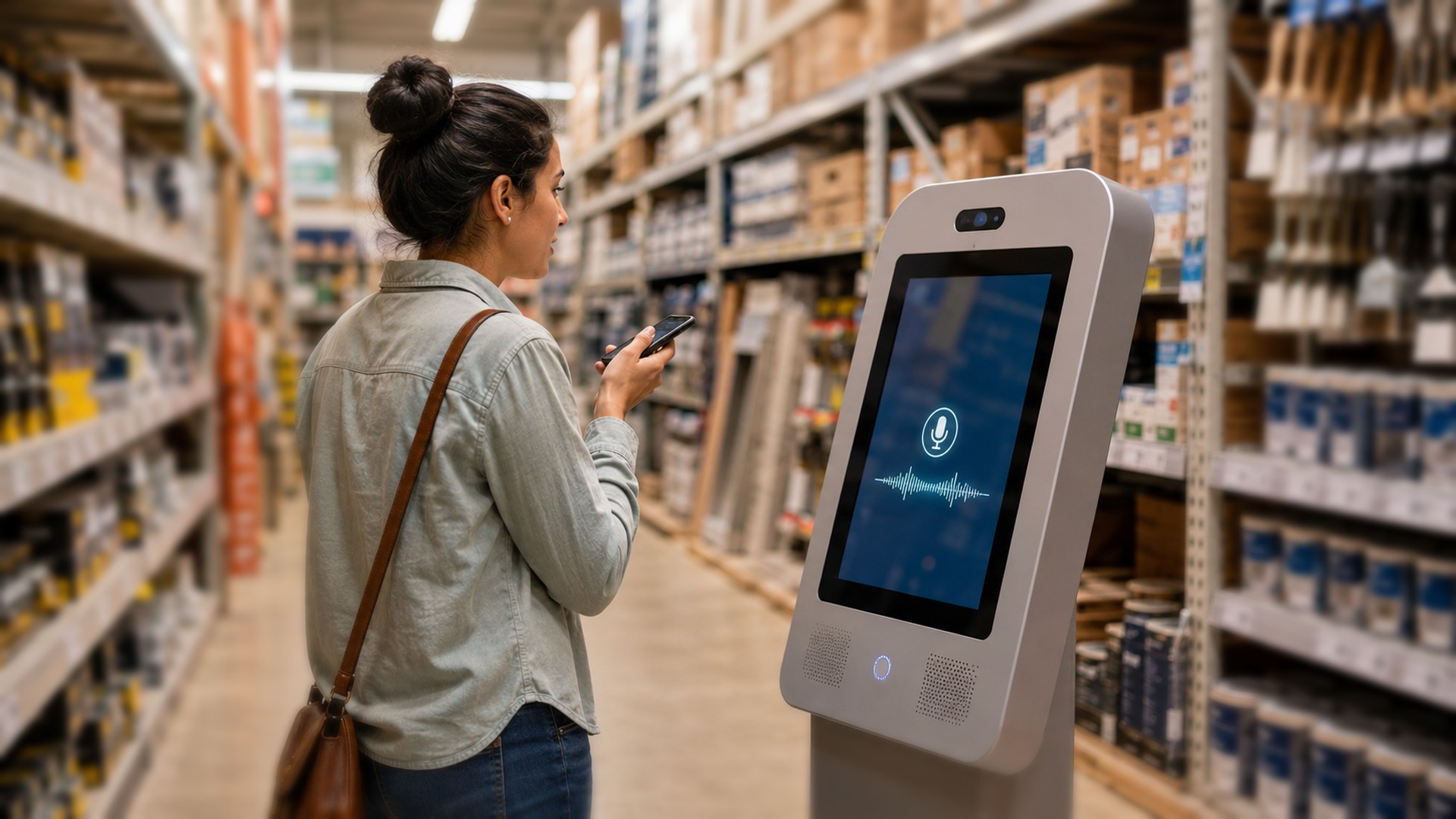
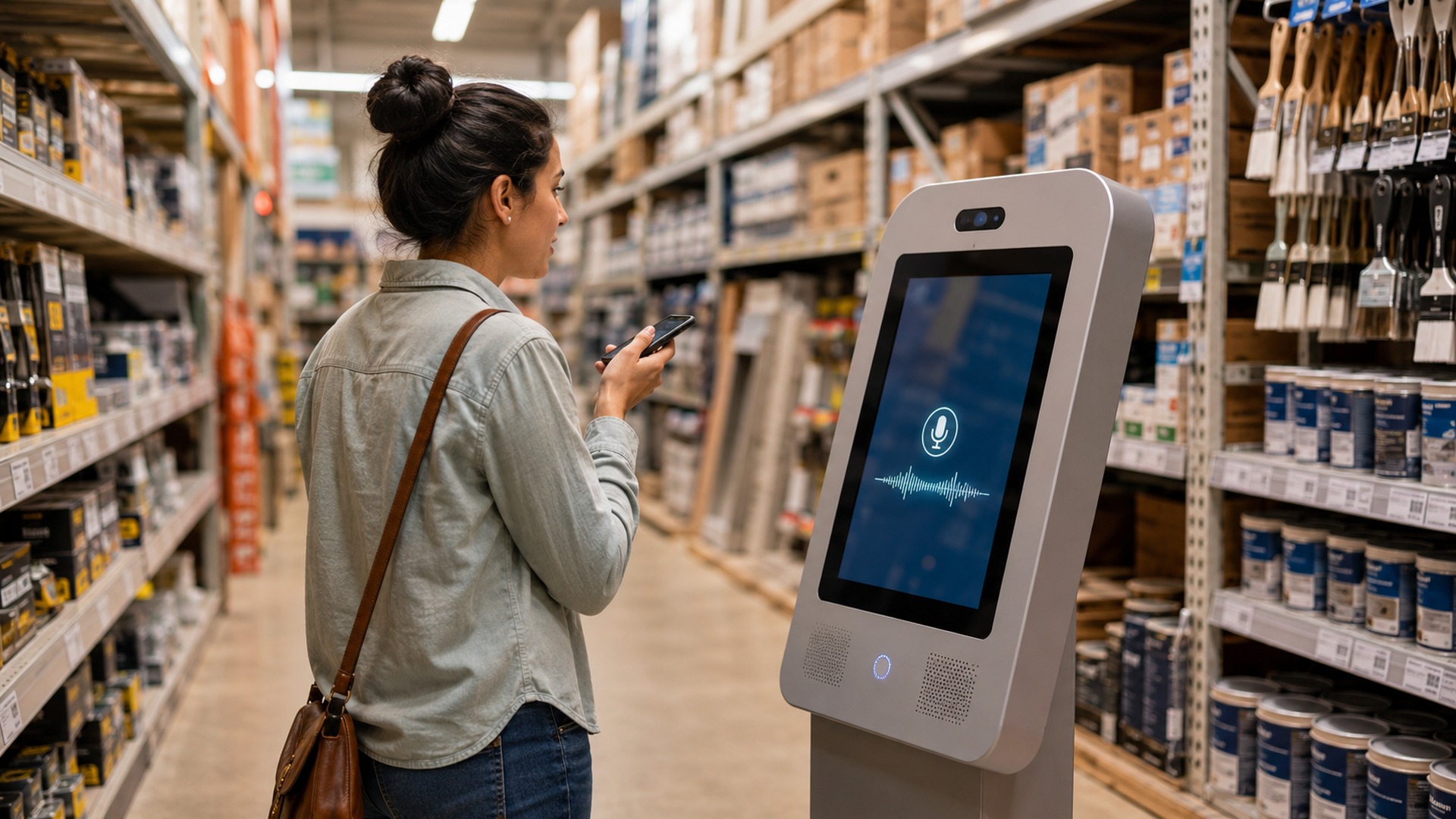
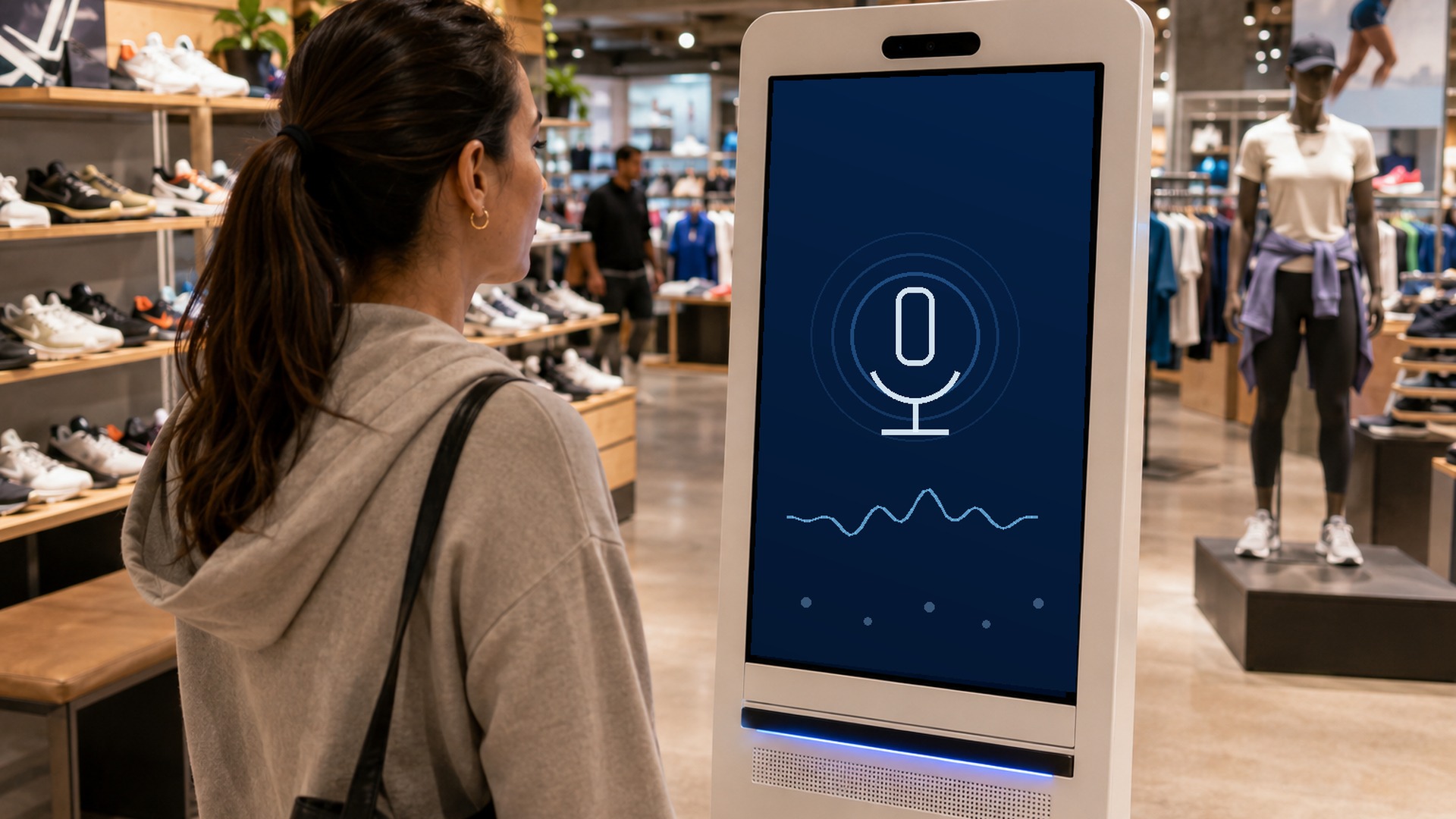
A store-based AI assistant can do something Copilot cannot easily do from outside the store. It can understand local inventory, local promotions, staff availability, aisle context, product adjacency, service policies and the messy realities of a customer standing in front of a shelf.
It can help the customer compare products. It can explain tradeoffs. It can recommend the missing item. It can translate. It can call a human associate when trust or judgment matters. And it can turn real customer questions into operational signal the retailer owns.
That is the point.
If third-party agents are going to sit closer to the transaction, retailers need owned AI experiences that sit closer to the customer.
What retailers should do now
The wrong reaction is to reject agentic commerce. Customers will use AI assistants to search, compare and buy because they reduce effort. Retailers should learn how those surfaces work and decide where participation makes sense.
The other wrong reaction is to treat third-party agent integrations as the whole strategy.
Stripe’s NRF recap said retailers are moving from “if” to “how” on agentic commerce, including investments in their own agentic shopping experiences alongside third-party agents. That is the right direction. Retailers need to show up where customers are going, but they also need AI experiences they control.
That starts with product data. If an AI agent is going to recommend products, the retailer’s catalog, attributes, availability, policies and content need to be clean enough to answer real customer questions. Thin product data will not survive agentic discovery.
Then retailers need to map the moments where customer trust is won or lost. In stores, that often means product comparison, project guidance, fit, compatibility, warranty, availability, delivery, returns and handoff to a human. Those are not just digital content problems. They are front-of-house service problems.
Finally, retailers should measure more than conversion. Measure what customers ask. Measure where they hesitate. Measure which questions require a human. Measure whether AI improves answer quality, basket completion, associate availability and service consistency.
Microsoft’s later retail piece on agentic AI robots framed stores as environments where AI can combine awareness, reasoning and natural interaction to reduce operational strain and create smarter, more adaptive stores. The useful part of that argument is not the robot. It is the idea that intelligence should spread into the physical workflow, not stay trapped at the edge of checkout.
Agentic checkout may make buying easier.
But buying is not the whole job of retail.
Retailers still need to help customers understand, choose, trust and act. As more of the online journey moves into AI agents, the store becomes the place where retailers can make that relationship direct again.
At Biscuit, this is the lane we care about: AI that helps real customers in real places, with human handoff when it matters. The next fight in retail AI will not just be who processes the transaction. It will be who owns the moment when the customer decides what to do next.